Market Overview
Prediction market traders are assigning a 53.5% probability to 2026 experiencing zero confirmed volcanic eruptions rated VEI 4 or higher—meaning the market is betting slightly toward the occurrence of at least one major eruption rather than a quiet year. This near-even split, sustained over the past 24 hours with $475,150 in volume, indicates genuine disagreement among market participants about baseline volcanic frequency and whether 2026 will deviate from recent patterns.
Why It Matters
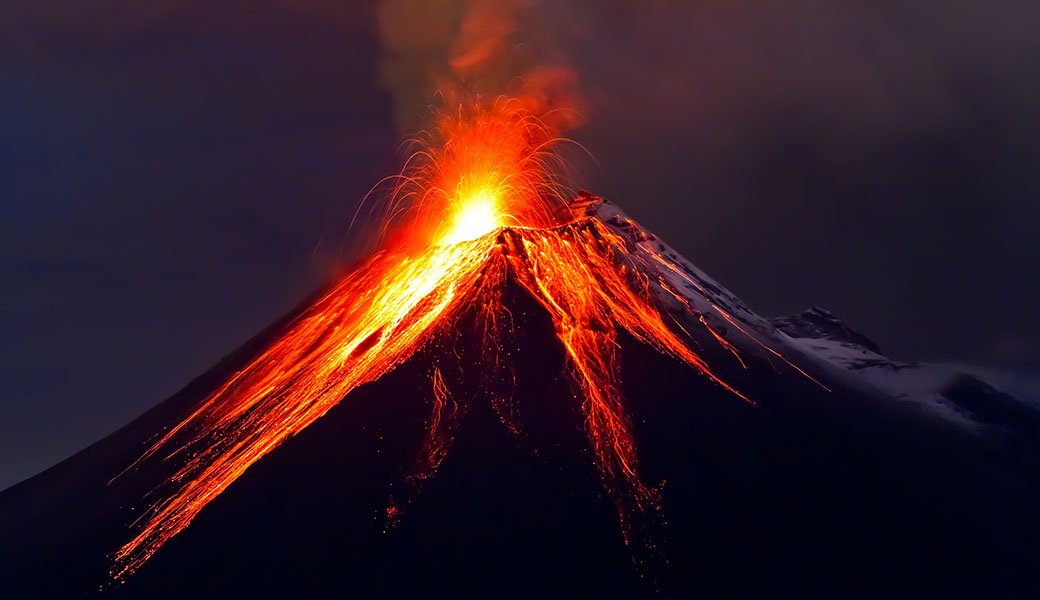
VEI 4 eruptions and above represent transformative geological events with potential global consequences. A VEI 4 eruption can inject material into the stratosphere, affecting regional air quality and climate. VEI 5 and 6 events—which have not occurred in the modern era but have happened within recorded history—could have significant climatic and economic impacts. The question of whether 2026 will be \"quiet\" versus experiencing at least one such event touches on both volcanic hazard forecasting uncertainty and the baseline frequency of extreme eruptions, making it scientifically meaningful rather than purely speculative.
Key Factors Driving the Probability
Historical frequency data suggests that truly major eruptions (VEI 4+) are rare but not exceptional on decade timescales. The Smithsonian's Global Volcanism Program tracks an average of roughly 0.5 to 1 VEI 4+ eruptions per year globally when looking at longer-term records, though this varies significantly by period. The 2000-2024 baseline referenced in the resolution criteria will anchor trader expectations. Some markets participants likely factor in that volcanic activity is not uniformly distributed—certain regions with known active systems (Indonesia, the Philippines, Chile) carry elevated risk. Conversely, others may note that 2023 and 2024 did not feature major eruptions at this threshold, supporting a cyclical \"quiet period\" narrative. The precise definition—\"confirmed\" with the Smithsonian as final arbiter as of March 31, 2027—adds clarity but also operational risk if data reporting lags.
Outlook
Movement in this market will likely depend on actual volcanic activity in late 2025 and throughout 2026, volcanic forecasts from observatories monitoring high-risk calderas and volcanoes, and any shifts in scientific consensus about eruption frequency under current geothermal conditions. The even odds suggest that until a major eruption occurs or clear scientific forecasting emerges, traders will remain split. Significant new volcanic unrest at monitored systems (such as those in the Pacific Ring of Fire) could shift probability sharply toward the \"at least one eruption\" outcome, while a quiet first half of 2026 might strengthen the \"zero\" case.