Market Overview
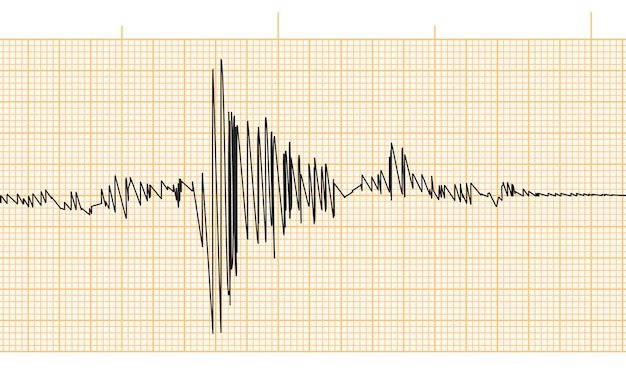
Prediction markets are currently assigning a 5% probability to the occurrence of a magnitude 10.0 or greater earthquake anywhere on Earth during 2026. The market, which carries nearly $590,000 in total volume, has held this probability steady over the past 24 hours, indicating relatively stable conviction among traders on this question. The market operates through December 31, 2026, with a potential extension through January 31, 2027 to allow for magnitude revisions, and uses the U.S. Geological Survey Earthquake Hazards Program as its authoritative resolution source.
Why It Matters
Magnitude 10.0 earthquakes represent a fundamental threshold in seismology—one that has never been definitively recorded in modern scientific history. The largest confirmed earthquake on record, the 1960 Great Chilean Earthquake, registered 9.5 on the Richter scale. The question of whether a 10.0+ magnitude event could occur within a specific 12-month window touches on both scientific understanding of planetary mechanics and catastrophic risk assessment. Given that such an earthquake would represent a civilization-altering natural disaster with global consequences, the market reflects serious consideration of low-probability, high-impact scenarios.
Key Factors
The 5% probability reflects several competing considerations. On one hand, seismologists acknowledge that magnitude 10.0+ events are theoretically possible given the Earth's tectonic structure, and no physical law makes them impossible. The 2004 Indian Ocean earthquake (9.1-9.3) and 2011 Tohoku earthquake (9.0-9.1) demonstrated that magnitude 9+ events occur with a frequency that, while rare, is not negligible over geological timescales. However, probabilistic seismic hazard analysis suggests that events of magnitude 10.0 or greater would require fault ruptures of unprecedented length and energy release, making their occurrence within any given 12-month period statistically improbable. The choice of 2026 as the timeframe—rather than a longer period—further constrains expectations, as it excludes the possibility of spreading probability across decades or centuries.
Outlook
The market's stability at 5% suggests traders view this as a well-calibrated estimate that neither requires significant upward revision based on recent seismic activity nor downward adjustment based on improved understanding. Movement would likely require either new scientific evidence suggesting structural conditions favoring extreme magnitude ruptures, or conversely, seismological findings that raise the energy threshold for magnitude 10.0 earthquakes beyond current models. The extension of the resolution deadline through January 2027 and the allowance for magnitude revisions acknowledges the technical challenges in confirming such an unprecedented event. Unless major seismic activity or scientific developments occur, this probability is expected to remain in the low single digits through the resolution period.