Market Overview
Prediction market participants are assigning a 5% probability to the occurrence of at least one magnitude 10.0 or higher earthquake anywhere on Earth between December 8, 2025, and December 31, 2026. The market has sustained this probability level over the past 24 hours and has accumulated $589,842 in trading volume, indicating meaningful engagement despite the low base rate for such extreme events.
Why It Matters
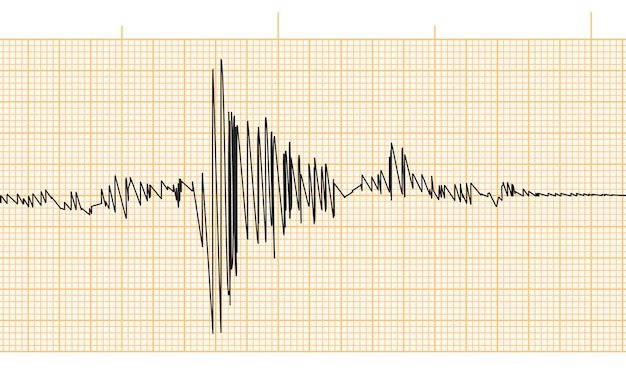
Magnitude 10.0 earthquakes represent a theoretical upper bound of seismic energy release that would cause catastrophic global disruption. Such an event has never been reliably recorded in modern seismological history. The question tests market participants' calibration around tail-risk geophysical events and their assumptions about whether current seismic activity or tectonic conditions differ materially from historical patterns. Resolution will rely on data from the U.S. Geological Survey, with contingency procedures allowing for magnitude revisions up to 24 hours after initial detection and provisions for alternative sources if detection delays occur.
Key Factors
The 5% probability reflects several underlying considerations. The largest instrumentally recorded earthquake was the 1960 Great Chilean Earthquake, measured at magnitude 9.5—the highest magnitude reliably documented. Seismological theory suggests magnitude 10.0 events are physically possible but would require ruptures significantly larger than those typically observed in tectonic zones. No empirical evidence suggests an increased likelihood of such events in the 13-month window compared to any other period. Market participants appear to be pricing in a small residual probability to account for either measurement uncertainty in the event of a near-magnitude-9.5 event or the possibility of previously underestimated maximum rupture scenarios.
Outlook
The probability is unlikely to shift materially absent new geological data suggesting elevated seismic risk in specific regions or revisions to theoretical models of maximum earthquake magnitude. The market's relatively stable 5% level suggests a consensus view that the base rate for such extreme events remains vanishingly small. Any significant movement would likely require either major scientific announcements regarding tectonic stress accumulation or, conversely, a notable period without large earthquakes that might reduce tail-risk premiums. Resolution is expected by early 2027 pending USGS confirmation of any qualifying event.