Market Overview
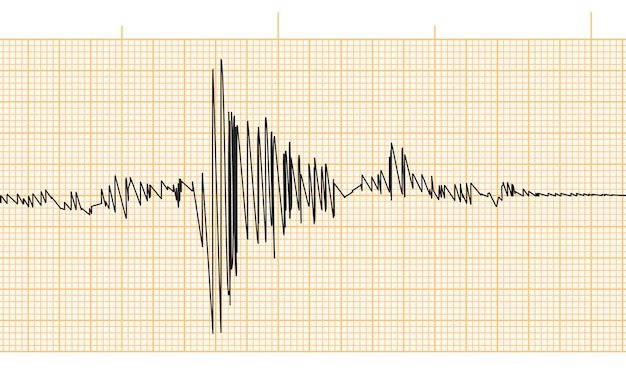
Prediction market traders are pricing the likelihood of a magnitude 10.0 or higher earthquake occurring anywhere on Earth between December 8, 2025 and December 31, 2026 at 5.0%, with the market having attracted $589,842 in volume. The market will resolve using the United States Geological Survey's Earthquake Hazards Program as the primary source, with provisions for alternative credible sources if needed and a 24-hour window to account for magnitude revisions following any qualifying event.
Why It Matters
A magnitude 10.0 earthquake would represent a seismic event of unprecedented recorded scale, carrying potentially catastrophic global implications. For context, the largest earthquake ever instrumentally recorded was the 1960 Valdivia earthquake in Chile, which measured 9.5 on the moment magnitude scale. The energy released by a magnitude 10.0 event would be approximately 32 times greater than the 9.5 Valdivia quake. Understanding the probability of such extreme events helps inform long-term disaster preparedness, infrastructure planning, and scientific understanding of seismic limits on Earth.
Key Factors
Several considerations underpin the 5% probability assessment. Seismological data indicates that magnitude 9.0+ earthquakes occur roughly once per decade globally, while magnitude 10.0 events have never been recorded in the instrumental era spanning over 100 years. The physical constraints of plate tectonics suggest that the largest subduction zone earthquakes—the primary source of magnitude 9+ events—appear to have practical upper limits around 9.5 to 9.6 magnitude. The one-year timeframe of this market (2026) is notably short relative to the expected frequency of even magnitude 9.0 events, further compressing the probability. However, scientific uncertainty remains regarding whether magnitude 10.0 is theoretically possible under extreme conditions, and seismic hazard cannot be predicted with certainty.
Outlook
The 5% probability likely reflects a baseline consideration of tail-risk scenarios and scientific uncertainty rather than any expectation of imminent activity. Market participants appear calibrated to the consensus view among seismologists that magnitude 10.0 is either impossible or extraordinarily rare—well beyond the timescale and frequency of known tectonic processes. The probability could shift if new geological evidence emerged suggesting larger subduction zones exist than previously understood, or if scientific models fundamentally revised upper magnitude estimates. Absent such developments, the market will likely remain stable through 2026, with resolution dependent on whether any significant seismic event is recorded and its measured magnitude revised during the USGS review period.