Market Overview
Prediction markets are currently pricing the probability of Iran losing control of Kharg Island by mid-2026 at 11.5%, suggesting traders view such an outcome as unlikely but not negligible. The market has remained stable at this level over the past 24 hours, with substantial trading volume of $1.9 million indicating active participant engagement despite the relatively low probability. The stability in pricing suggests the market has absorbed available information and reflects a consensus view among traders on the geopolitical barriers to such a dramatic shift in control over the strategically vital Gulf location.
Why It Matters
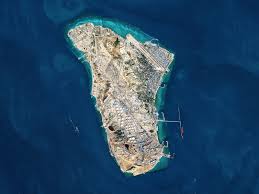
Kharg Island serves as one of Iran's primary oil export terminals and a key facility in its broader maritime infrastructure, making it a potential flashpoint in the event of wider Middle Eastern conflict or sanctions escalation. Control of the island would represent a major shift in regional power dynamics and would directly impact global energy markets and Iran's ability to generate foreign revenue from crude exports. The relatively low but non-trivial probability assigned by markets reflects acknowledgment that while such a seizure would require dramatic military action, the volatile regional environment and history of direct confrontations in the Gulf create non-zero scenarios under which it could occur.
Key Factors
Several structural factors constrain the likelihood of control changing hands by June 2026. Kharg Island is located in the Persian Gulf relatively close to Iran's mainland, providing substantial defensive advantages and allowing Iran to maintain military presence and control without requiring sustained overseas commitments. Any seizure would likely require a coordinated military campaign involving either the United States, Israel, Gulf Cooperation Council states, or some combination thereof—a threshold requiring either major escalation of current conflicts or initiation of new ones. The 18-month timeframe is relatively compressed for achieving such a geopolitical reversal, particularly given the diplomatic, military, and logistical complexities involved in establishing and maintaining control over contested territory. Additionally, the market's resolution criteria explicitly exclude temporary disruptions, raids, or contested control, requiring that another state or authority achieve clear, established primary governmental or military control—a high evidentiary bar that further constrains realistic scenarios.
Outlook
Market participants would likely reassess this probability upward only in response to major escalatory events in the region—such as a significant expansion of the current Gaza and Yemen conflicts, direct large-scale military operations between Iran and Israel, or a fundamental breakdown of deterrence structures in the Gulf. Conversely, any diplomatic progress toward de-escalation or renewal of international agreements limiting Iranian nuclear activities would likely push probabilities lower. The stable pricing at 11.5% suggests the market views the current balance of deterrence and military capabilities as likely to persist through the first half of 2026, while acknowledging genuine geopolitical volatility that prevents the probability from approaching zero.