Market Overview
The prediction market on Kharg Island's control status has settled at an 11.5% probability that Iran will cede the strategically important petroleum hub by mid-2026. With trading volume exceeding $1.9 million, the market reflects serious interest in potential geopolitical shifts in the Persian Gulf, though current odds heavily favor the status quo of Iranian sovereignty. The probability has remained stable over recent trading periods, indicating a market consensus around the low likelihood of control transfer.
Why It Matters
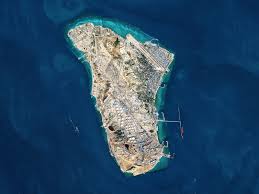
Kharg Island sits at the center of Iran's critical oil export infrastructure, housing major petroleum loading facilities that generate essential revenue for the Iranian state. Any loss of control would represent a significant military defeat and economic blow to Tehran. The island also carries symbolic weight as sovereign Iranian territory; its seizure would mark an escalation beyond conventional military strikes or blockades. For regional stakeholders and global energy markets, the status of Kharg Island directly affects Iran's capacity to export crude oil, making control of the island relevant to international crude prices and economic sanctions regimes.
Key Factors
Several factors underpin the current 11.5% assessment. Most fundamentally, Iran maintains military forces on the island and no neighboring state currently possesses both the military capability and political will to launch and sustain a full-scale amphibious assault. The United States, despite regional military presence, has not pursued direct territorial conquest of Iranian assets. International law and diplomatic norms create significant barriers to naked territorial seizure even in conflict scenarios. However, the market does price in limited but material risk, likely reflecting uncertain trajectories of ongoing Middle Eastern conflicts and the possibility of expanded regional warfare over an 18-month timeframe. The resolution criteria—requiring actual, established control rather than temporary occupation or bombardment—set a high bar that further reduces the probability of a \"Yes\" outcome.
Outlook
The stability of odds at 11.5% suggests the market views this as a tail-risk event unlikely to occur through normal geopolitical progression. Movement would likely require either a major escalation in regional conflict involving powers with amphibious capability, or a negotiated settlement involving territorial concessions by Iran. Factors to watch include the trajectory of ongoing conflicts in Iraq and Syria, the military capabilities of potential adversaries in the region, and any diplomatic developments that might reshape regional power alignments. Short of dramatic military escalation or peace agreements involving territorial transfers, the probability is likely to remain in the single-digit to low double-digit range through the resolution date.