Market Overview
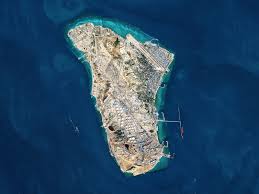
Prediction markets are assigning an 11.5% probability that Iran will lose control of Kharg Island, a strategically significant oil infrastructure hub in the Persian Gulf, by June 30, 2026. The market has maintained this probability level over the past 24 hours, with substantial trading volume of approximately $1.9 million indicating active participation and genuine uncertainty among traders. The definition of \"loss of control\" is deliberately stringent, requiring that another state, occupying force, or internationally backed authority establish actual governmental or military control—excluding temporary military operations, bombardment, or announced intentions without substantive occupation.
Why It Matters
Kharg Island represents one of Iran's critical petroleum export facilities and a key strategic asset in the Persian Gulf. The island's status has implications for global oil markets, regional military balance, and the broader geopolitical conflict between Iran and its regional adversaries, particularly Israel and Gulf-aligned states. A change in control would represent a significant shift in regional power dynamics and could reshape energy markets. The resolution criteria emphasize actual, established control rather than temporary disruptions, reflecting the distinction between tactical military actions and strategic territorial loss.
Key Factors Driving the Low Probability
Several factors appear to underpin the modest 11.5% odds. First, Kharg Island remains under Iranian military and governmental administration with limited recent successful challenges to its control despite regional tensions. Second, establishing and maintaining alternative control over an island within Iran's strategic sphere would require sustained military presence and resources that would likely provoke significant Iranian response. Third, the 18-month timeframe is relatively short for achieving the territorial displacement required by the market's resolution criteria. Fourth, any loss of control would likely require either a significant escalation in regional conflict or a negotiated agreement—both scenarios that traders currently assess as unlikely within this period. The market's stringent definition excluding temporary operations and unsubstantiated claims also raises the threshold for resolution to \"Yes.\"
Outlook
Movement in this market would likely be triggered by significant developments in Iran-Israel military escalation, broader regional conflict expansion, changes in U.S. Middle East policy, or concrete signals of negotiated settlements involving territorial arrangements. Traders appear to be pricing in continued Iranian control as the baseline assumption, though the 11.5% probability acknowledges non-trivial tail risks given the volatile regional environment. Monitor official statements from Iranian, Israeli, U.S., and Gulf state governments, as well as military developments in the Persian Gulf, for indicators that could shift market expectations substantially.