Market Overview
The prediction market assessing whether Kharg Island will no longer be under Iranian control by May 31, 2026, is currently priced at 7.5% probability, with trading volume reaching $4 million. This low probability reflects market participants' view that Iran is unlikely to lose control of the island—one of its most critical oil and gas infrastructure hubs in the Persian Gulf—within the specified timeframe. The price has remained stable over the past 24 hours, indicating a consensus view rather than a reaction to breaking developments.
Why It Matters
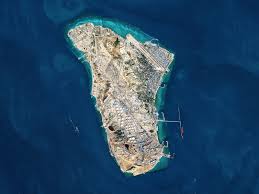
Kharg Island holds substantial strategic and economic significance for Iran. The island serves as a vital export terminal for Iranian oil and gas, making it central to the country's energy revenue and regional influence. Any loss of control would represent a major geopolitical shift in the Persian Gulf, a region already characterized by significant military tensions. The market's low probability estimate suggests that participants view the security situation and political landscape as insufficient to produce such a dramatic change within 16 months, despite ongoing regional instability.
Key Factors
Several factors underpin the market's skepticism. First, Kharg Island is heavily fortified and militarily defended by Iranian forces, making direct military seizure logistically challenging without a major regional conflict. Second, the resolution criteria are deliberately stringent—requiring actual establishment of control rather than temporary raids, bombardment, or claims—which raises the bar significantly. Third, while regional tensions remain elevated, no immediate military campaign specifically targeting Iranian territorial control has materialized at scale. Fourth, any transfer of control would typically require either a major military defeat for Iran or a negotiated settlement, neither of which appears imminent. The 16-month timeframe further constrains the probability, as significant geopolitical shifts of this magnitude typically unfold over longer periods.
Outlook
The market would likely shift materially only if one of several conditions emerged: a significant escalation in regional conflict involving direct threats to Iranian territory, credible reporting of active military operations targeting the island, or diplomatic developments suggesting territorial concessions through negotiated settlement. Absent such developments, the low probability reflects a baseline assessment that Iran will maintain control through the resolution date. Market participants appear to distinguish between the region's chronic instability and the specific, high threshold required for loss of control over a strategically critical island.