Market Overview
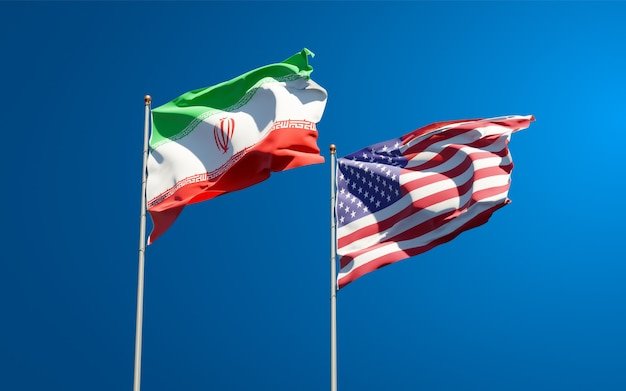
Prediction markets assessing the fall of Iran's Islamic Republic have edged upward to 3.8%, according to current odds, up from 2.8% twenty-four hours earlier. With $2.56 million in trading volume, the market attracts significant capital despite the low absolute probability. The resolution criteria are explicitly narrow: the regime must lose de facto power over Iran's majority population through regime change—not reform, succession, or territorial loss alone—requiring a \"clear break in continuity\" evidenced by a new governing system or provisional authority.
Why It Matters
The Iranian regime's stability directly affects Middle Eastern geopolitics, oil markets, nuclear proliferation risks, and U.S. foreign policy. A regime collapse would represent one of the most consequential geopolitical events of the decade, triggering uncertainty over Iran's nuclear program, regional proxy networks, and power succession. However, the low market probability reflects historical precedent: the Islamic Republic has survived four decades of sanctions, regional wars, and domestic unrest, suggesting institutional staying power that traders price as unlikely to break within fourteen months.
Key Factors
Multiple structural elements support the current low odds. The Islamic Republic's security apparatus—the Revolutionary Guards Corps (IRGC), Basij militia, and intelligence services—remains tightly integrated under clerical control and has repeatedly suppressed large-scale unrest, most recently during 2022-2023 protests following Mahsa Amini's death. Succession mechanisms, though opaque, are institutionalized; the Guardian Council and Assembly of Experts manage clerical leadership transitions. Economic hardship and youth disaffection create persistent friction, yet have not mobilized sustained revolutionary movements capable of threatening core state structures. The recent uptick from 2.8% to 3.8% may reflect heightened regional tensions, including Israeli airstrikes in October 2024 and ongoing nuclear negotiations, which could theoretically accelerate instability. However, traders appear to differentiate between chronic stress and acute regime-threatening crisis.
Outlook
For the probability to shift materially upward, the market would likely require evidence of major factional splits within the regime itself, defection of security force leadership, loss of territorial control outside capital regions, or emergence of a credible alternative governing structure. Developments to monitor include: escalation of the Israeli-Iranian military confrontation, succession disputes following Supreme Leader Ali Khamenei, or unprecedented scale of coordinated protest movements. Conversely, consolidation of power, successful nuclear negotiations, or economic stabilization could lower odds further. Given the May 31, 2026 deadline and the regime's demonstrated capacity to absorb shocks, the market's 3.8% probability reflects a low-probability tail event rather than base-case scenario.