Market Overview
The proposition that active US military personnel will physically enter Iranian territory by April 30 currently trades at 98.9% implied probability, based on $159.6 million in cumulative volume. The stability of this figure over the past 24 hours—holding flat despite substantial trading activity—suggests a market that has largely priced in available information and reached a settled consensus, even as the actual outcome remains uncertain in real terms.
Why It Matters
This market's extraordinarily high probability reflects not confidence in imminent invasion, but rather a structural feature of prediction markets on tail risks with short timeframes. A nearly 99% probability does not indicate market participants believe such action is likely or imminent; rather, it suggests they assign a non-trivial probability to escalation scenarios that, while unlikely on any given day, accumulate across a four-month window. The sheer volume traded—$159 million—indicates significant interest in pricing this geopolitical risk, despite the consensus lean.
Key Factors
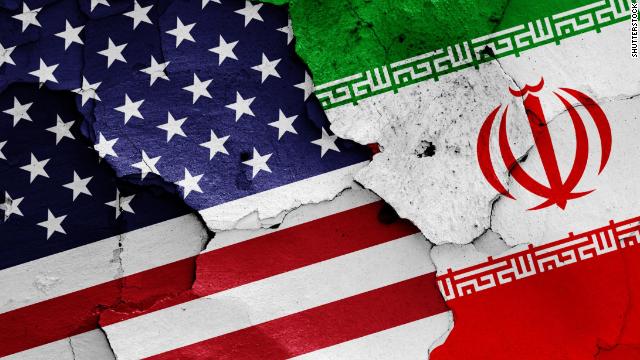
Several elements support the market's current positioning. US military presence in the Persian Gulf region remains substantial, with forward-deployed assets capable of rapid response. Ongoing tensions between Iran and the United States, including periodic military incidents and proxy conflicts, create a baseline of elevated geopolitical risk. The inclusion of special operations forces in the resolution criteria expands the definition beyond conventional invasion to include covert military operations, which historically have occurred without public announcement until after the fact. The four-month timeline to April 30 also provides an extended window during which unforeseen escalations could theoretically occur.
Conversely, the market's near-certainty also reflects the absence of current credible reporting suggesting imminent ground operations. No recent sharp movements in the price indicate that new information has shifted expectations materially. The flat positioning over 24 hours suggests the market has absorbed recent headlines and found no reason to substantially alter its view.
Outlook
Movement in this market would likely require major geopolitical events—a significant Iranian military provocation, a dramatic shift in US policy, or a major regional conflict escalation—to materially alter probabilities. The current 98.9% figure may reflect a market equilibrium where tail risk is perpetually priced in but not treated as imminent. Any substantial decline in probability would signal a meaningful reduction in perceived escalation risk, while a push toward 99%+ would indicate traders assigning even greater weight to potential scenarios driving ground operations.