Market Overview
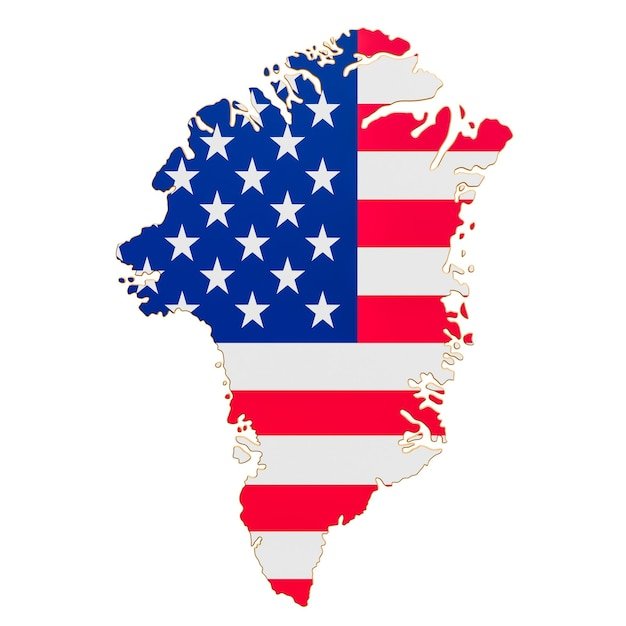
With nearly $10 million in trading volume, the Greenland acquisition market has established itself as a notable test of political risk sentiment. The 14% probability suggests traders view the prospect as unlikely but non-negligible—comparable to odds on other low-probability geopolitical events. The market's stability over the past 24 hours indicates a settled view rather than reactive trading, suggesting participants have reached an equilibrium assessment of current conditions.
Why It Matters
The stakes of this market extend beyond speculative intrigue. Greenland holds strategic significance for Arctic security, rare earth minerals, and polar geopolitics as great powers compete for northern hemisphere influence. Any U.S. acquisition would represent an unprecedented expansion of American territorial reach and a fundamental shift in NATO dynamics, given Greenland's status as a Danish realm. The market's definition is deliberately broad—encompassing full sovereignty transfer, exclusive U.S. jurisdiction agreements, or acquisition by force—to capture the range of possible arrangements that could satisfy the resolution criteria.
Key Factors
The 14% probability reflects several countervailing considerations. On one hand, Denmark and Greenland have consistently and unambiguously rejected any sale or transfer of sovereignty, with Greenland's government reaffirming its independence aspirations. The legal and diplomatic barriers to any such transfer remain formidable. However, the market appears to assign non-trivial weight to the possibility of unconventional approaches: exclusive jurisdiction arrangements modeled on Guantánamo Bay, military agreements that might be structured to meet the resolution criteria, or the use of executive authority to establish de facto control. The incoming Trump administration's skepticism toward traditional diplomacy and its previous interest in acquiring foreign territory has evidently elevated traders' probability estimates above what they might otherwise be.
Outlook
The market's persistence at 14% suggests traders are pricing in a scenario in which standard diplomatic channels prove unsuccessful but the Trump administration nonetheless pursues alternative mechanisms—whether through negotiation, economic pressure, or the invocation of national security rationales. Movement in the probability would likely correlate with specific developments: concrete legislative proposals, serious diplomatic overtures to Greenlandic authorities, or statements by U.S. officials that signal commitment to acquisition rather than posturing. Conversely, statements from Greenland or Denmark reaffirming the permanent nature of Greenland's status, or evidence of U.S. focus on other foreign policy priorities, could lower the probability. For now, the market reflects a guarded acknowledgment that while acquisition remains a distant prospect, the current political environment has made it impossible to discount entirely.