Market Overview
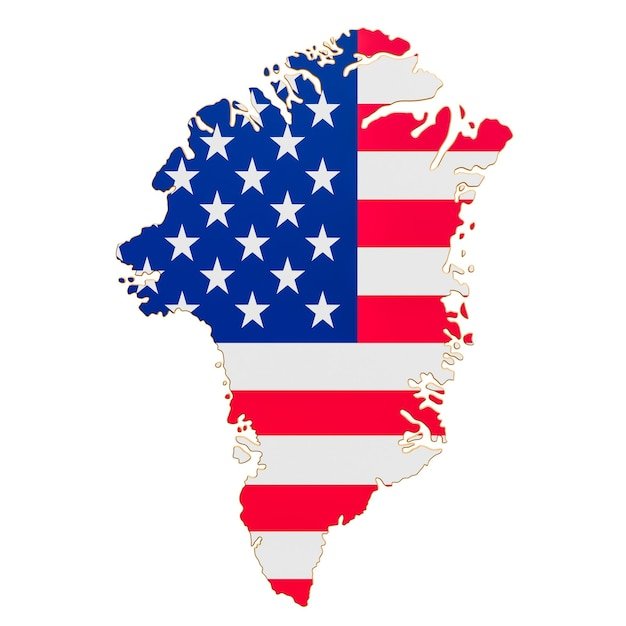
Prediction markets have stabilized at 16.5% odds for U.S. acquisition of Greenlandic territory by December 31, 2026, with roughly $9.5 million in trading volume supporting the position. The probability reflects a meaningful but decidedly minority outcome—traders are assessing that while acquisition remains within the realm of possibility, the likelihood remains low relative to the baseline assumption that the status quo persists. The market requires not merely negotiation or preliminary agreement, but a binding legal instrument establishing either sovereignty transfer or exclusive U.S. jurisdiction over a defined area.
Why It Matters
Greenland's strategic position in the Arctic, combined with its vast mineral resources and proximity to shipping routes, has elevated the territory's geopolitical importance. Recent public statements from U.S. leadership expressing interest in acquisition have injected real uncertainty into what would historically have been treated as implausible. However, the high bar set by the resolution criteria—demanding a binding treaty or legislative instrument rather than a non-binding proposal or framework—means that market odds must account for the substantial diplomatic and legal hurdles that would precede any actual transfer. Success would represent a significant shift in Greenlandic sovereignty and Denmark's territorial holdings, making even preliminary agreements globally consequential.
Key Factors
Several dynamics are shaping the current probability. First, Denmark and Greenland have consistently and firmly rejected acquisition proposals, with Greenlandic officials emphasizing the territory's path toward independence rather than transfer to another power. This creates substantial political friction that markets are weighing heavily. Second, the timeline is compressed—fewer than 24 months remain until the market deadline, narrowing the window for negotiations, legal drafting, legislative passage, and ratification. Third, U.S. domestic political context matters; any such agreement would require Congressional approval or executive action capable of withstanding legal challenge, both of which carry implementation risk and timeline uncertainty. Fourth, the resolution criteria explicitly exclude non-binding statements and preliminary negotiations, meaning mere diplomatic interest or public proposals would not move the market—only executed legal instruments count. This specificity reduces the risk of premature resolution while accurately reflecting the gulf between rhetorical interest and institutional commitment.
Outlook
The 16.5% probability implies markets view acquisition as unlikely but not impossible, consistent with a scenario in which diplomatic pressure, strategic incentives, or unforeseen geopolitical shifts could theoretically produce a binding agreement, but where entrenched resistance and institutional inertia represent the most probable path. Substantial shifts in odds would likely require either major conciliatory signals from Denmark or Greenland's political leadership, or a dramatic external event that fundamentally alters the cost-benefit calculation for all parties. Conversely, any explicit restatement of rejection by relevant governments would likely compress odds further. The market remains sensitive to developments on the diplomatic track, but the high evidentiary bar for resolution—a signed, binding instrument—means that much of the market probability depends on assessing whether behind-the-scenes negotiations might eventually produce a formal proposal, regardless of public statements.