Market Overview
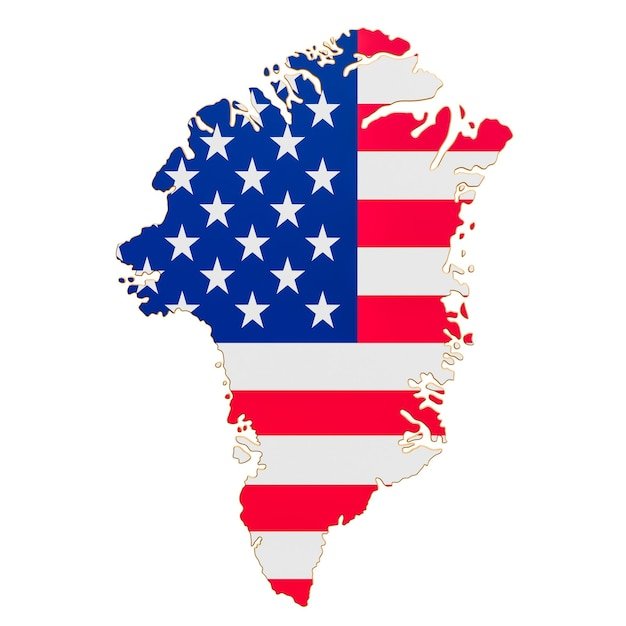
Prediction markets currently assign a 14.5% probability to U.S. acquisition of Greenlandic territory by December 31, 2026, with trading volume exceeding $9.2 million indicating substantial participant interest in the question. The probability has remained stable over the past 24 hours, suggesting the market has settled on a baseline assessment despite the visibility of the issue. The resolution criteria are stringent, requiring a binding agreement or legal instrument establishing U.S. sovereignty or primary jurisdiction over a defined territory—announcements, negotiations, or non-binding frameworks do not qualify.
Why It Matters
The Greenland acquisition question sits at the intersection of geopolitics, sovereignty law, and domestic political feasibility. Control of Greenland would carry strategic implications given its Arctic location, mineral resources, and positioning relative to Russia and China. However, the market's relatively low baseline probability reflects the substantial obstacles: Greenland is an autonomous territory within the Danish realm with its own government, Denmark has explicitly opposed any sale, and international law provides no straightforward mechanism for such territorial transfer absent agreement from both Denmark and Greenland's authorities. For the U.S., pursuing acquisition through binding legal instruments would require congressional action and/or formal treaty negotiation—processes that demand political will and diplomatic engagement unlikely to succeed against the wishes of both Copenhagen and Nuuk.
Key Factors
The 14.5% pricing incorporates several countervailing considerations. On one hand, rhetorical interest from U.S. political figures has elevated the topic's public profile, and long-term strategic competition with China and Russia in the Arctic could provide motivation for policymakers to pursue Arctic territorial expansion. Greenland's vast mineral resources and its position on shipping routes add tangible incentives. Conversely, the market is heavily weighted by structural barriers: Denmark has a veto over any transaction affecting a constituent territory, Greenland's government has shown no willingness to negotiate sovereignty transfer, and the domestic political cost within both Denmark and Greenland of ceding territory would be severe. The requirement for a binding legal instrument—not merely a proposal or framework agreement—further constrains the probability, as it demands not just initiation of talks but consummation of a formal transfer within roughly two years. Public statements and diplomatic outreach, even if intensified, would not satisfy the market's resolution criteria.
Outlook
Movement in this probability will likely depend on concrete developments: any signed treaty, congressional legislation authorizing acquisition, or formal agreement from Danish and Greenlandic authorities establishing U.S. control would dramatically shift the odds. Conversely, explicit rejection of the proposal by Greenlandic leadership or Danish parliament, or cooling of U.S. political interest, could drive the probability lower. The current 14.5% appears to reflect a market consensus that while the concept remains in the realm of possibility given recent political attention, the diplomatic and legal infrastructure for actual acquisition is too weak to yield meaningful probability in a 12-month window. Traders are essentially pricing in a tail-risk scenario: circumstances under which geopolitical urgency or dramatic political shifts overcome the structural impediments.