Market Overview
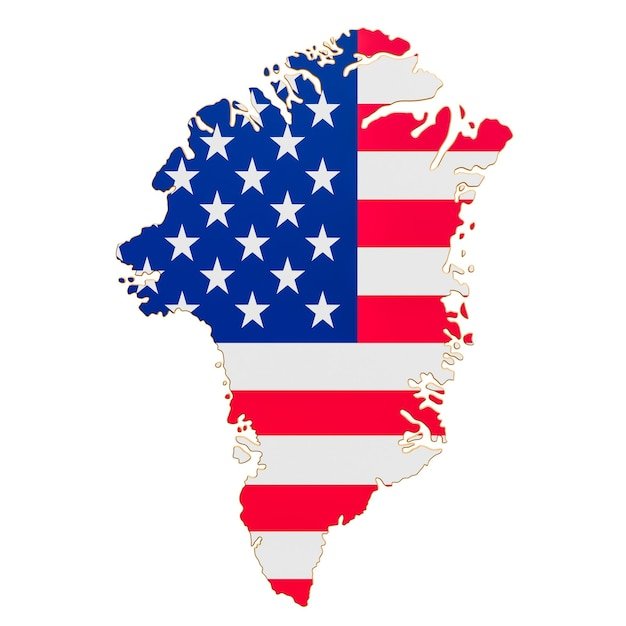
Prediction markets are currently pricing an approximately 1-in-7 chance that the United States will acquire sovereignty or primary control over any portion of Greenland by December 31, 2026. The 14% probability has remained stable over the past 24 hours despite nearly $9.7 million in trading volume, suggesting a market in equilibrium rather than reacting to fresh developments. The resolution criteria are notably specific, requiring either a formal transfer of sovereignty, a binding agreement establishing exclusive U.S. jurisdiction, or acquisition through force—ruling out non-binding statements, base agreements, or commercial arrangements.
Why It Matters
The question taps into a recurring diplomatic tension between the U.S. and Denmark regarding Arctic geopolitics and resource access. Greenland holds strategic importance due to its Arctic location, rare earth minerals, and potential shipping routes, making it periodically relevant to U.S. security and economic interests. However, Greenland is an autonomous territory of Denmark with its own government, and any territorial transfer would require extraordinary legal and political circumstances. The outcome hinges not on routine bilateral relations but on scenarios ranging from unprecedented diplomatic breakthroughs to unforeseeable crises that would reshape Arctic governance.
Key Factors
Several factors underpin the 14% valuation. First, there is no active negotiation or binding proposal currently documented, and public statements from Danish and Greenlandic officials have consistently rejected territorial cession. The geopolitical climate, while competitive in the Arctic, remains well short of conditions that would motivate formal sovereignty transfers. Second, the timeline is compressed—just over one year remains until the market deadline, leaving limited window for complex negotiations and legislative processes. Third, the resolution criteria require a binding legal instrument, a high bar that excludes exploratory talks or informal agreements. Fourth, historical precedent suggests such arrangements are exceedingly rare in modern international relations, particularly among allied democracies. However, the nonzero probability reflects genuine uncertainty about extraordinary geopolitical developments and acknowledges that long-tail scenarios, while improbable, remain possible.
Outlook
Movement in this market would likely require tangible evidence of serious negotiations or formal proposals backed by binding language. Barring major geopolitical upheaval or a dramatic shift in U.S.-Denmark relations, the probability is expected to remain in the low single-digit to low-double-digit range. Key developments to monitor include any official statements from U.S., Danish, or Greenlandic governments signaling renewed territorial discussions, changes in Arctic policy frameworks, or unforeseen crises altering the strategic calculus. For now, the market reflects a baseline skepticism toward the outcome balanced against acknowledgment of tail-risk scenarios.