Market Overview
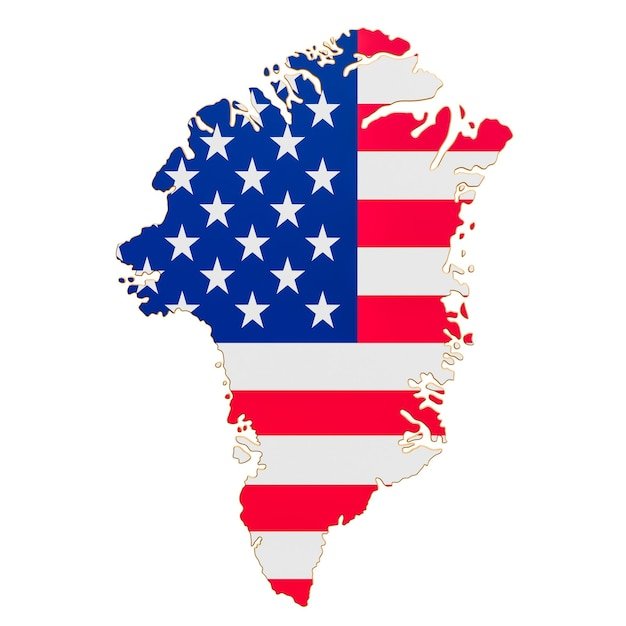
Prediction markets are currently assessing a 14% probability that the United States will acquire control of any land territory comprising part of Greenland by December 31, 2026. With nearly $9.7 million in volume, this represents a substantive wager on an outcome that would constitute a dramatic shift in North Atlantic geopolitics. The market's resolution criteria are stringent, requiring either a formal transfer of sovereignty, a binding agreement establishing exclusive US jurisdiction, or acquisition through military force—ruling out non-binding frameworks, leases, or basing agreements.
Why It Matters
Greenland holds strategic significance for Arctic security, climate monitoring, and natural resources, making questions about its political status a matter of international concern. Any change in Greenland's territorial control would represent a rare modern instance of territorial acquisition in a developed region and would reshape Danish-American relations, NATO alignment in the Arctic, and regional stability. The market's existence itself reflects the degree to which public discourse has elevated the prospect from diplomatic impossibility to a measurable, if low-probability, scenario.
Key Factors
Several dynamics support the current 14% assessment. First, explicit statements by senior US officials about acquisition possibilities have elevated market participants' baseline expectations above zero, though these remain speculative and lack legislative backing. Second, Greenland's semi-autonomous status within the Danish realm creates theoretical pathways for negotiation distinct from acquiring territory from a fully sovereign nation, though Danish sovereignty remains the legal reality. Third, the market's two-year window is relatively short for such a consequential geopolitical realignment, limiting the scenarios under which binding agreements could materialize.
Conversely, substantial structural barriers constrain the probability. Denmark has consistently reaffirmed Greenlandic sovereignty and rejected acquisition discussions. The Greenlandic government has similarly emphasized independence aspirations within existing frameworks. International law, NATO alliance structures, and the absence of any active negotiating channel or legislative initiative in Congress all work against materialization. The market's 14% pricing appears to reflect a small-but-nonzero tail risk rather than a genuine expectation of acquisition.
Outlook
For the probability to materially shift upward, markets would likely require concrete signals: a binding negotiation announcement, legislative action in Congress, or a formal proposal from the executive branch backed by legal instruments. Downward pressure could emerge from explicit Danish-Greenlandic statements foreclosing discussions or from cooling of US official rhetoric on the topic. The current stable pricing at 14% suggests market participants view the scenario as unlikely but not impossible within the compressed timeframe—a positioning that reflects both recent political novelty and underlying structural constraints on execution.