Market Overview
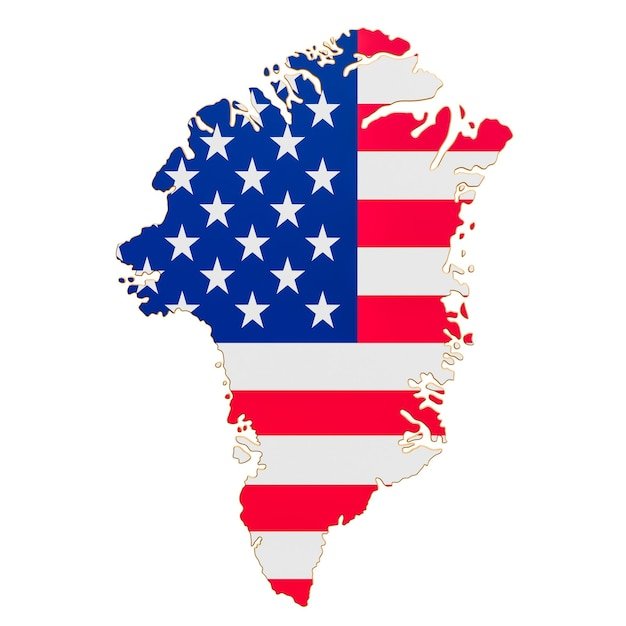
A prediction market asking whether the United States will acquire control of any land territory in Greenland by December 31, 2026, is currently priced at 14% probability. The market has maintained this level over the past 24 hours despite significant trading activity, with nearly $10 million in volume, indicating active disagreement among market participants about the likelihood of such an acquisition occurring within the specified timeframe.
The resolution criteria are deliberately expansive, encompassing three distinct pathways: formal transfer of sovereignty (such as incorporation as a U.S. territory), establishment of primary or exclusive U.S. jurisdiction through binding agreement, or acquisition through military force. Notably, the market excludes non-binding proposals, basing rights, leases, and commercial concessions—requiring only that a binding legal instrument be signed by the deadline, regardless of when the actual transfer takes effect.
Why It Matters
Greenland, an autonomous territory of Denmark controlling vast Arctic resources and strategically positioned for polar shipping routes, has become an intermittent focus of U.S. geopolitical interest. The prospect of formal U.S. territorial acquisition represents a dramatic shift in Arctic governance and represents a low-probability but high-impact scenario for international relations. The 14% probability reflects genuine uncertainty among market participants about the political and diplomatic willingness of U.S., Danish, and Greenlandic leadership to pursue such an arrangement.
Key Factors
Several structural factors constrain the probability. Greenland, while autonomous in most affairs, remains under Danish sovereignty, and Denmark has consistently opposed any cession of territory. Greenlandic public opinion, while sometimes receptive to greater independence, has shown limited support for U.S. control. The timeframe—approximately 12 months from market creation—is exceptionally compressed for negotiating, drafting, and executing such a constitutionally and diplomatically complex agreement. Previous expressions of U.S. interest in acquiring Greenland have not progressed beyond rhetorical stages.
Conversely, Arctic strategic competition with Russia and China, combined with potential shifts in U.S. policy priorities, could theoretically create conditions favoring negotiation. Additionally, the market's inclusion of binding agreements signed before the deadline but effective afterward broadens the resolution criteria somewhat, allowing for agreements-in-principle to qualify.
Outlook
The 14% probability implies that market participants assign meaningful but decidedly long-odds status to this scenario. For the probability to rise materially, observable indicators would include official statements from U.S., Danish, or Greenlandic governments indicating serious negotiation; legislative or executive proposals in Congress; or public signaling that acquisition discussions were underway. Conversely, explicit statements ruling out such arrangements, or completion of alternative agreements strengthening Greenlandic-Danish ties, could compress the probability further. The substantial trading volume suggests this remains an actively monitored market despite its seemingly remote base case.