Market Overview
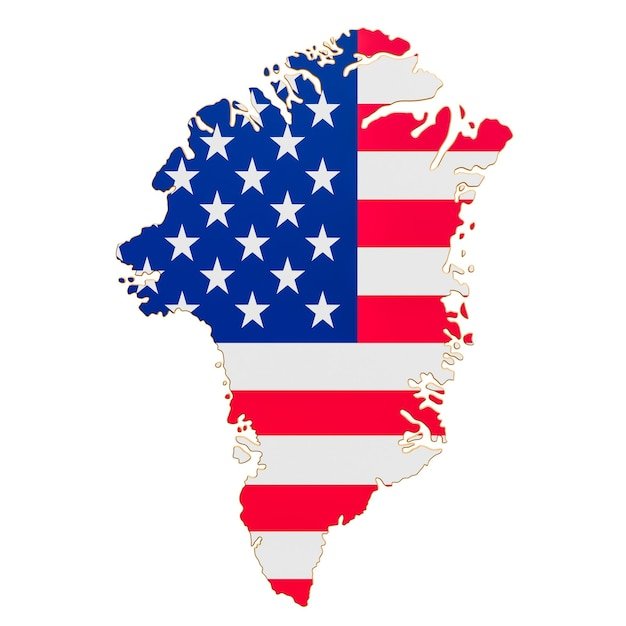
The prediction market on U.S. acquisition of Greenlandic territory has stabilized at 14.5% probability, with trading volume reaching $9.2 million and no material price movement in the past 24 hours. The market's resolution criteria are stringent, requiring either a formal transfer of sovereignty or binding establishment of primary U.S. jurisdiction and control over a defined area—explicitly excluding non-binding proposals, negotiations, leasing arrangements, or simple basing rights. This high evidentiary bar means that mere announcements or political overtures, however significant, will not trigger resolution unless accompanied by legally binding instruments.
Why It Matters
The question touches on core issues of Arctic geopolitics, U.S. strategic positioning, and Nordic sovereignty. Greenland's geographic location, natural resources, and potential as a military vantage point in a warming Arctic have elevated its importance to U.S. strategic planners. The market's modest but non-negligible odds reflect genuine uncertainty about the trajectory of U.S.-Danish relations and changing security calculations in the region. However, the 85.5% probability assigned to \"No\" indicates that market participants broadly expect traditional diplomatic norms and legal frameworks to prevail over any territorial acquisition attempt within the timeframe.
Key Factors
Several dynamics underpin the current pricing. First, Denmark's status as a NATO ally and Greenland's self-governing territory within the Danish realm create substantial institutional and legal barriers to any formal transfer. Second, the market's definition requires binding legal instruments—a high threshold that rules out preliminary discussions or non-binding frameworks. Third, the 24-month resolution window is relatively compressed; major territorial arrangements typically require years of negotiation and ratification. Fourth, international law and the principle of sovereignty create significant legal and diplomatic costs for any acquiring party. Fifth, Greenlandic public opinion and its government's preferences would likely resist involuntary transfer, adding another political obstacle. Finally, the current 14.5% probability may partially reflect tail-risk scenarios, including unforeseen geopolitical crises or dramatic shifts in U.S.-Danish relations that could theoretically accelerate negotiations.
Outlook
For the probability to materially shift upward, a major catalyst would be required: a formal proposal from the U.S. government coupled with signals of Danish or Greenlandic openness, followed by concrete legislative or treaty language. Conversely, any official statements from Copenhagen or Nuuk firmly rejecting territorial discussions, or a normalization of U.S.-Denmark relations around other Arctic frameworks, could push odds lower. The market's stability over the past day suggests traders see current geopolitical positioning as unlikely to produce binding territorial agreements within 12 months. Developments to watch include U.S. Arctic strategy announcements, Danish-Greenlandic negotiations on sovereignty, and any shifts in NATO coordination around regional defense that might alter the political calculus for all parties involved.