What Happened
Prediction market odds for German warship transit through the Strait of Hormuz jumped from 4.2% to 20.5% in a single move, representing a 16.2 percentage point swing on $106,865 in trading volume. This substantial repricing occurred in a market that explicitly requires confirmation of military vessels passing through the narrowest section of the waterway between Iran and Oman by April 30, 2026. The high trading volume suggests this reflects genuine new information rather than minor market fluctuation, though market participants have not yet moved odds above one-in-five.
Why It Matters
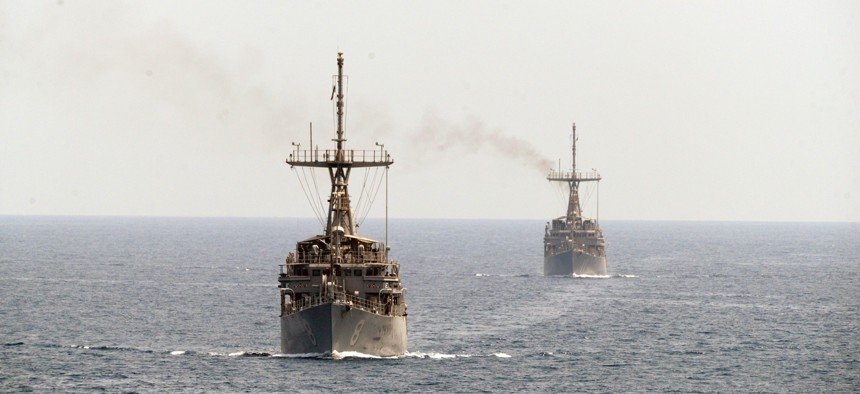
A German warship deployment through the Strait of Hormuz would represent a notable shift in European military posture toward the Middle East and Iran. Historically, European naval operations in the region have been limited compared to U.S. activity, and German participation in freedom-of-navigation operations through this critical chokepoint has been minimal. The Strait of Hormuz carries roughly one-third of global maritime oil trade, making it geopolitically sensitive and strategically important. A German transit would signal Berlin's willingness to assume greater security responsibilities and potentially coordinate with other Western powers on regional stability, though it could also complicate relations with Tehran.
Market Context
The market's current 20.5% odds suggest traders view the scenario as plausible but not probable—roughly a one-in-five chance over the next 16+ months. The sharp upward movement indicates a recent catalyst rather than gradual probability adjustment. Possible drivers could include statements about European naval strategy reviews, discussions within NATO about Middle East commitments, or tensions affecting shipping security in the region. The relatively modest absolute probability level reflects the high bar for German military deployment of this nature, which would require policy decisions at the federal government level and coordination within European and NATO frameworks.
Outlook
Future market movements will likely track developments in German defense policy, broader European Middle East strategy reviews, and regional tensions affecting shipping corridors. Any official German government announcements about Middle East naval deployments or freedom-of-navigation operations could drive further repricing. Conversely, if regional tensions ease or European policy focuses elsewhere, odds would likely decline back toward baseline levels. The market appears to be pricing in a non-trivial but still unlikely scenario, with substantial uncertainty reflecting genuine policy ambiguity around German military commitments through mid-2026.