Market Overview
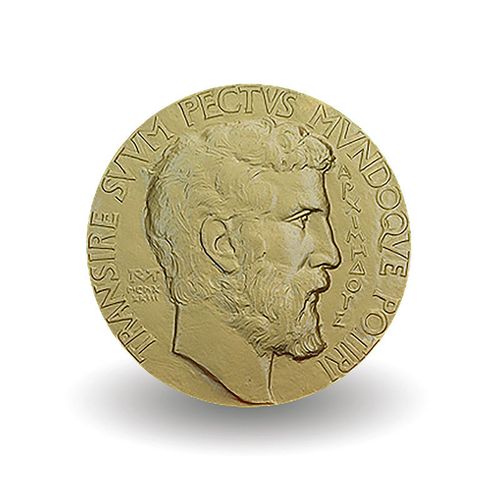
Yu Deng is positioned as the frontrunner in prediction markets for the 2026 Fields Medal, with a probability of 54.5% that has remained stable over the past 24 hours. The Fields Medal, widely regarded as mathematics' equivalent to the Nobel Prize, is awarded biennially to between two and four mathematicians under age 40 at the International Congress of the International Mathematical Union. The 2026 ceremony will take place July 23-30 in an as-yet-unannounced location, with the award announcement expected by mid-August. At a 54.5% probability, the market indicates meaningful uncertainty about whether Deng will ultimately be selected, with a combined 45.5% probability distributed among other candidates and scenarios.
Why It Matters
The Fields Medal carries substantial weight in the mathematics community and beyond. Recipients gain international recognition, enhanced career prospects, and typically see increased research funding and institutional opportunities. The award's selectivity—with only 2-4 medals distributed globally every four years from a pool of thousands of eligible mathematicians under 40—underscores its prestige. For those following mathematical research and breakthroughs, Fields Medal predictions offer insight into which contemporary mathematicians are making the most significant contributions to the field. The market's confidence in Deng reflects genuine achievements in his research that have captured attention within the mathematical community.
Key Factors
Market probability for Fields Medal candidates depends on the perceived significance and impact of their recent mathematical work. Deng's 54.5% probability suggests traders view his research contributions as substantial, though not universally certain to merit selection. The International Mathematical Union's selection committee comprises leading mathematicians who evaluate innovations across pure mathematics, applied mathematics, and mathematical physics. Several factors influence these assessments: the novelty and depth of theoretical contributions, the solution of long-standing problems, the breadth of impact across mathematical subfields, and the candidate's overall trajectory and promise. With voting approximately 18 months away, perceptions of Deng's work may shift as new research is published, other mathematicians release significant results, or the broader mathematical community reassesses recent contributions.
Outlook
The relatively modest gap between Deng's probability and 50% suggests the market views him as a strong but not overwhelming favorite. Developments likely to influence the probability include publication of new mathematical results by Deng or competing candidates, announcements of major mathematical breakthroughs or prizes awarded to other mathematicians, and any emerging consensus within the professional mathematics community about the most important recent work. The selection committee's deliberations remain opaque until announcement, creating inherent uncertainty. As the July 2026 ceremony approaches and the committee's composition is finalized, market probability may shift based on updated information about which mathematicians are being seriously considered. Trading volume of $98,666 indicates moderate but meaningful interest in this market among those following elite mathematics.