Market Overview
Yu Deng is currently priced as a leading candidate for the 2026 Fields Medal, with prediction market traders assigning a 41.5% probability to a win. The figure has remained stable over the past 24 hours, indicating a settled consensus rather than shifting expectations. With approximately 18 months until the award ceremony at the International Congress of Mathematicians in Denver, the market has established Yu as a frontrunner among multiple qualified candidates.
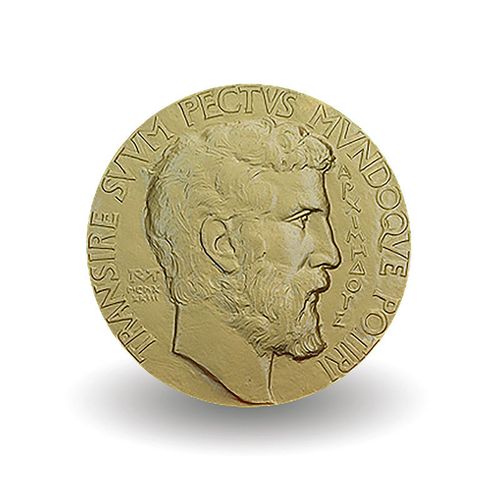
The Fields Medal, awarded biennially to mathematicians under 40, typically honors two to four recipients. This means that even a 41.5% probability for a single candidate reflects strong but not overwhelming favoritism—the medal's structure inherently distributes credit among multiple exceptional mathematicians. The $99,138 in trading volume suggests meaningful market engagement, though participants recognize that predicting award outcomes remains genuinely uncertain.
Why It Matters
The Fields Medal selection process serves as a barometer of mathematical talent and influence within the global research community. Yu Deng's high odds reflect recognition of significant research contributions, likely in areas that have demonstrated substantial impact. Markets pricing mathematical awards provide insight into how the broader intellectual community assesses emerging scholars and which research directions are gaining prominence.
Key Factors
Several elements shape Yu Deng's candidacy. Demonstrated breakthrough research, particularly recent publications or solved long-standing problems, would strengthen the case for selection. The fields of mathematics valued most highly by the International Mathematical Union's prize committee—which rotate and shift with mathematical progress—also matter significantly. Competition from other under-40 mathematicians worldwide represents the core challenge; with potentially three or more medalists selected from the global pool, Yu faces multiple other strong candidates.
Geographic and institutional factors may also influence outcomes. The International Mathematical Union considers global representation in selections, and the composition of the prize committee itself shapes which research areas receive emphasis. Any major mathematical breakthroughs announced between now and mid-2026, or conversely, any developments affecting the visibility or reach of existing work, could shift assessments.
Outlook
The stable 41.5% probability suggests the market views Yu Deng as a genuine leading contender with meaningful uncertainty remaining. As ICM 2026 approaches, new publications, citations of prior work, and visibility within the mathematical community could modulate odds in either direction. The relatively high baseline probability indicates that prediction market participants already view Yu as among the most likely winners, yet the implied 58.5% probability of not winning reflects the inherent difficulty in predicting selective, peer-reviewed awards with multiple potential honorees.