Market Overview
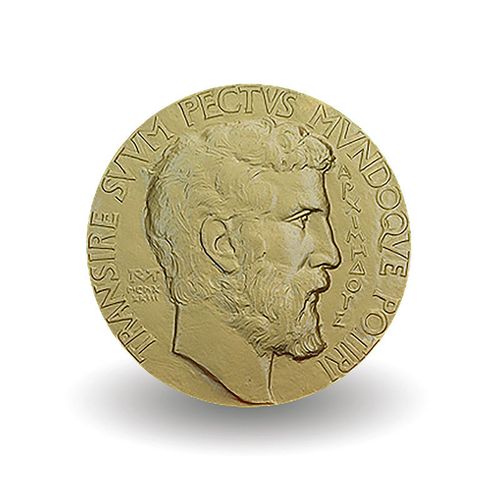
Yu Deng is currently favored to win the 2026 Fields Medal at roughly 37% implied probability, according to active prediction markets with over $116,000 in volume. This probability reflects a significant but not dominant position among potential recipients of mathematics' most prestigious award. The Fields Medal, awarded every four years to mathematicians under 40, typically goes to two to four recipients, meaning multiple winners are selected at the International Congress of Mathematicians scheduled for July 23-30, 2026.
Why It Matters
The Fields Medal carries outsized significance in mathematics and academia broadly. Winning the medal often catalyzes career advancement, funding opportunities, and intellectual influence within the field. For Deng specifically, a 37% probability suggests the market views him as a leading candidate but acknowledges substantial competition from other accomplished mathematicians under 40 who may be in contention. The award's rarity—given to only a handful of mathematicians globally per cycle—makes individual probabilities inherently modest even for strong candidates.
Key Factors
Market sentiment on Deng likely reflects his research contributions, publication record, and recognition within the mathematical community. However, several structural uncertainties complicate prediction. First, the selection committee's preferences remain opaque until announcement. Second, the pool of potential Fields medalists typically includes 10-15 mathematicians with credible claims, fragmenting the probability space. Third, recent breakthrough results or emerging talent can shift expert consensus in the months before the ceremony. Deng's 37% probability implies markets view him as a top-tier candidate but not as the overwhelming favorite—suggesting at least 3-4 other mathematicians carry meaningful winning chances.
Outlook
The 18-month window until the July 2026 ceremony provides ample time for new mathematical results, recognition from major prizes, and shifting expert assessment to move probabilities. Markets may tighten around frontrunners as the ceremony approaches and additional information surfaces, or they may remain dispersed if the field remains genuinely competitive. Developments such as major conference presentations, prize wins (Fields Medal itself has several precursors), or paradigm-shifting publications could materially shift Deng's odds in either direction. The probability would be expected to fluctuate modestly between now and announcement, potentially converging closer to the true judgment of the selection committee as the event nears.