Market Overview
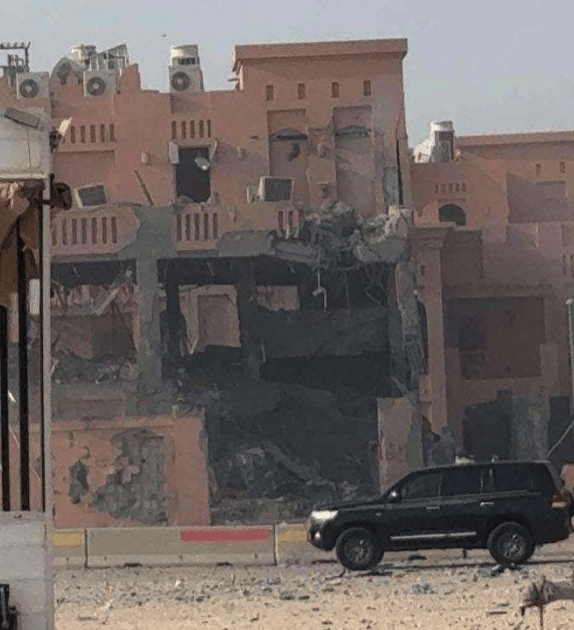
Prediction markets are currently assessing a 30.5% probability that the United States will launch a military offensive intended to establish control over Iranian territory by December 31, 2026. With $19.4 million in volume, this represents one of the more heavily traded geopolitical futures, indicating sustained trader interest in the question despite stable pricing over the past 24 hours. The steady probability suggests the market has largely priced in current information and near-term expectations, with traders viewing military escalation as a material but far-from-certain scenario over the next 14 months.
Why It Matters
A U.S. military invasion of Iran would represent one of the most significant geopolitical events of the decade, with cascading consequences for global energy markets, regional stability, and international relations. Iran sits atop the world's fourth-largest proven oil reserves, and any military conflict would likely trigger severe supply disruptions, inflation, and economic volatility globally. The distinction in this market—requiring intent to \"establish control\" over territory—sets a high bar, effectively ruling out limited strikes or surgical operations in favor of full-scale invasion scenarios. Traders assessing this probability are implicitly weighing the likelihood of a dramatic escalation from current posture to sustained military occupation.
Key Factors
Several variables are driving the 30.5% assessment. The incoming U.S. administration's posture toward Iran and the nuclear question remains central; more hawkish policies increase invasion odds, while diplomatic pathways reduce them. Current Iranian nuclear program developments and any perceived moves toward weapons capability would elevate risk. Regional proxy conflicts—particularly Houthi attacks on shipping and Israeli-Iranian tensions—could either de-escalate through negotiation or trigger direct confrontation. The political cost and domestic U.S. support for such an operation is also material; public appetite for major ground wars remains limited post-Iraq and Afghanistan. Additionally, the readiness and deployment capacity of U.S. military forces, as well as potential allied involvement or opposition, would shape both feasibility and political viability.
Outlook
The 30% probability reflects genuine but uncertain risk rather than base-case expectations. Markets typically assign 20–35% odds to low-probability, high-impact events that cannot be ruled out but require significant threshold changes to materialize. To shift materially higher, traders would likely need to see concrete evidence of invasion planning, a major Iranian provocation, or explicit policy statements from U.S. leadership. Conversely, renewed diplomatic engagement, nuclear deal progress, or regional de-escalation could drive the probability lower. Over the next 14 months, monitoring statements from U.S. policymakers, developments in Iran's nuclear program, and regional incident frequency will be key indicators of whether this probability drifts upward or stabilizes.