Market Overview
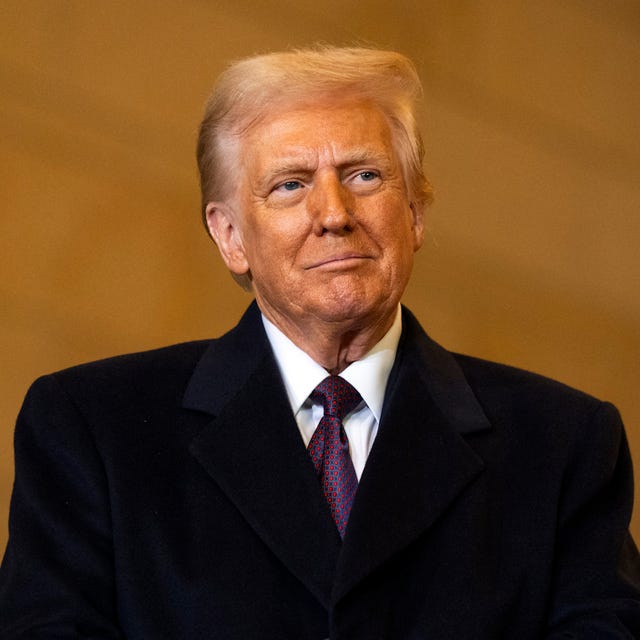
Prediction markets currently price Donald Trump's chances of winning the 2026 Nobel Peace Prize at 6.5%, unchanged over the past 24 hours despite substantial trading volume of $2.6 million. This positions Trump as a meaningful but clear long-shot candidate in a category historically dominated by diplomats, humanitarian leaders, and organizations addressing global conflicts. For context, a 6.5% probability is equivalent to roughly 15-to-1 odds against the outcome.
Why It Matters
The Nobel Peace Prize carries significant symbolic weight in international affairs, and markets assessing this outcome reflect broader questions about Trump's foreign policy legacy and the Norwegian Nobel Committee's willingness to recognize polarizing political figures. Trump previously claimed he was nominated for the prize during his first presidency, citing his role in brokering the Abraham Accords and his engagement with North Korea. The 2026 award will be decided by a committee of Norwegian politicians and scholars, whose selections have sometimes generated controversy but generally align with mainstream international consensus on conflict resolution and humanitarian progress. Market pricing on this outcome thus functions as a proxy for how traders assess both Trump's diplomatic achievements and the institutional barriers he may face.
Key Factors
Several dynamics appear to underpin the current probability. First, Trump's stated foreign policy accomplishments—including the Abraham Accords normalization agreements between Israel and Gulf states—represent tangible diplomatic initiatives that could theoretically justify consideration. Second, the Norwegian Nobel Committee has historically avoided awarding the prize to sitting or recent U.S. leaders, with the committee tending toward consensus figures or those addressing immediate humanitarian crises. Third, Trump's polarizing status and ongoing political controversy in the United States and internationally may weigh against his candidacy among international evaluators. Fourth, the market reflects genuine uncertainty about which geopolitical developments will dominate 2025-2026 and whether alternative candidates—such as figures involved in potential peace negotiations or humanitarian work—might emerge as stronger contenders by the time the award is announced.
Outlook
Trump's odds will likely remain modest unless significant geopolitical developments thrust him into a central diplomatic role over the next 18 months. A major breakthrough in conflict resolution attributed to his efforts—such as resolution of the Ukraine war or Middle East tensions—could shift market expectations upward. Conversely, continued polarization or international tension could further reduce his probability. Markets will likely track statements from Norwegian officials, Trump's diplomatic activities, and broader geopolitical developments as indicators of shifting sentiment. The 6.5% current price suggests traders view a Trump prize as improbable but not impossible, reflecting the inherent difficulty in predicting this highly subjective institutional award.