Market Overview
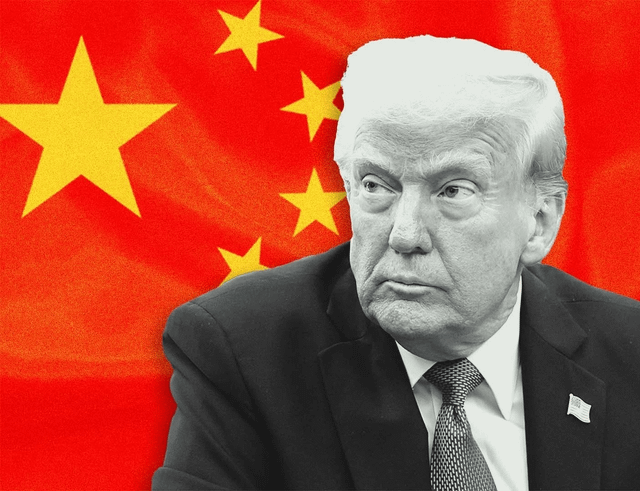
The prediction market assessing the likelihood of a Trump visit to China by April 30, 2026, has settled at a minimal 0.8% probability, with modest trading volume of $11.8 million indicating measured engagement from market participants. The probability has ticked up only marginally from 0.7% over the past 24 hours, suggesting relative stability in expectations rather than recent catalysts driving changes in sentiment. The extremely low odds reflect a market consensus that such a visit remains highly improbable over the next 16 months, despite the obvious historical precedent of Trump's December 2016 meeting with Xi Jinping in Mar-a-Lago shortly after his election victory.
Why It Matters
A presidential visit to China would represent a significant diplomatic development with implications for U.S.-China relations on trade, technology, and strategic competition. The current tenor of bilateral relations—marked by elevated tariffs, restrictions on advanced semiconductors, and competing geopolitical interests in Asia—establishes the baseline context for market expectations. From a market perspective, such minimal odds suggest participants believe the current administration's approach prioritizes distance and leverage-building over personal diplomatic summits in Beijing, or that the near-term window is simply too compressed for such a complex visit to materialize.
Key Factors
Several structural considerations likely drive the near-zero probability. First, sitting U.S. presidents visiting Beijing represents a formal, high-stakes diplomatic gesture typically reserved for moments of strategic reset or negotiation breakthrough—conditions not currently present given ongoing trade tensions and technology decoupling. Second, the timeline constraint is meaningful; organizing a presidential visit to China involves extensive advance planning, security coordination, and diplomatic preparation that compress the feasibility window considerably. Third, recent statements and policy direction from Trump's administration have emphasized confrontational positioning toward China rather than engagement, making voluntary visits appear inconsistent with signaled priorities. Fourth, the lack of any public discussion or reporting of such plans being under consideration suggests market participants view this as speculative rather than based on operational developments.
Outlook
For this market to move materially higher, significant shifts in either bilateral relations or Trump administration strategy would be required—such as a major trade deal breakthrough, crisis requiring high-level intervention, or explicit public signaling of planned diplomatic engagement. The current 0.8% valuation effectively prices this scenario as tail-risk unlikely within the specified timeframe. Market participants appear comfortable that the sub-1% odds adequately compensate for residual uncertainty while reflecting the substantial structural and political barriers to such a visit materializing before April 2026.