Market Overview
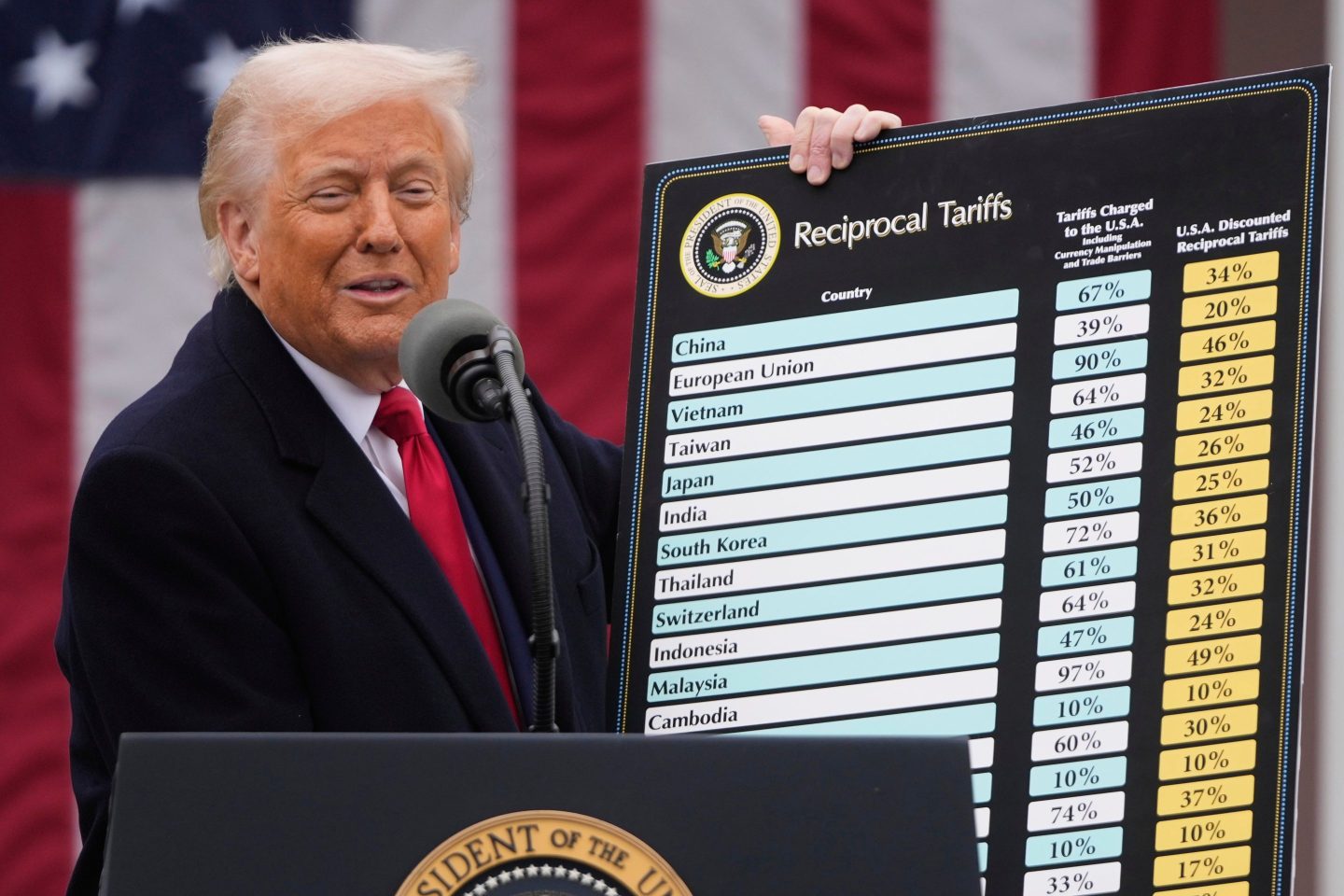
Prediction markets are currently valuing the likelihood of forced tariff refunds at 81.5%, a substantial majority that has remained stable over the past day despite volatile broader market conditions. The market centers on a specific legal outcome: the denial of the Trump administration's appeal in V.O.S. Selections, Inc. v. United States, combined with the actual issuance of refunds to importers within 13 months. With roughly $388,000 in trading volume, the market reflects serious capital commitment to this outcome, suggesting participant confidence in the underlying thesis that the initial May 28, 2025 Court of International Trade ruling against the administration's tariff authority will survive appellate review.
Why It Matters
The resolution of this market hinges on two interconnected questions with significant economic consequences. First, whether appellate courts will uphold the lower court's finding that Trump's invocation of the International Emergency Economic Powers Act exceeded executive authority for imposing broad tariffs. Second, whether the administration will actually process refunds rather than fight the decision through additional appeals or legislative workarounds. The outcome affects billions of dollars in collected tariffs and shapes the legal boundaries of executive power in trade policy. For importers, manufacturers, and supply chain participants, the refund question represents either recovery of sunk costs or acceptance of permanently elevated input expenses depending on how the appeals process concludes.
Key Factors
Several elements are likely driving the market's high confidence in refunds. The initial court ruling targeted multiple tariff measures as exceeding statutory authority, providing a relatively narrow legal basis for appeal rather than a judgment call on policy merits. The fact that the Trump administration consolidated the appeal into a single case suggests judicial efficiency favoring resolution, and the tight 13-month timeframe means refunds must occur before the 2026 midterm elections, when political pressure to avoid repeating tariff disputes may peak. However, the market's 81.5% probability—not approaching near-certainty—reflects meaningful uncertainty about appeals court behavior, the possibility of partial rather than full reversals, and potential delays in the refund process itself. The market's resolution criteria require actual refunds, not merely court orders or announced plans, which introduces execution risk. Additionally, the administration's demonstrated willingness to pursue aggressive tariff policies suggests potential for additional legal maneuvering or legislative action to preserve tariff revenue.
Outlook
Movement in this market will likely depend on appellate court signals, statements from administration officials regarding compliance with adverse rulings, and reporting on customs agency preparations for potential refund processing. The stability of the market over the past day suggests participants have already priced in available information and are waiting for substantive developments in the appeal process. Key triggers that could shift odds include appellate court scheduling decisions, oral argument outcomes if publicly reported, interim rulings on procedural questions, or statements from Treasury or Customs and Border Protection about refund readiness. The 13-month timeline is tight enough that delays in the appeals process itself could pressure the \"Yes\" probability downward in coming months, while any preliminary rulings suggesting appeal weakness could push it higher.