Market Overview
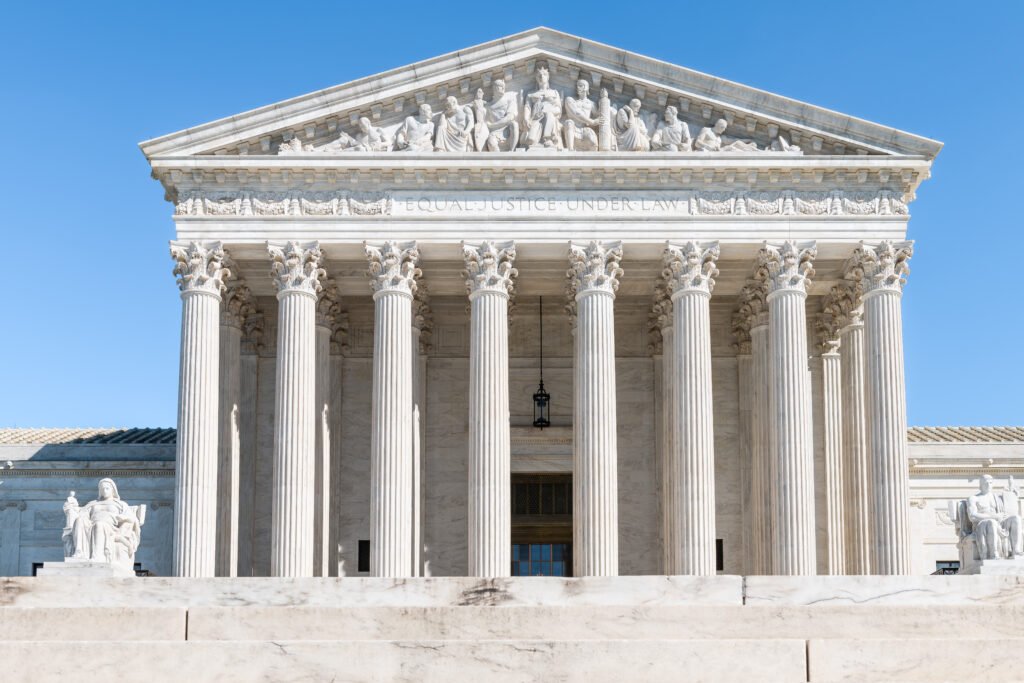
Prediction markets are assigning a low probability—13.5%—to the Supreme Court granting certiorari in a case addressing the legal status of sports event contracts by mid-2026. With $929,259 in volume, the market reflects modest but meaningful interest in whether the nation's highest court will take up questions about whether such contracts constitute regulated derivatives, whether federal oversight preempts state gambling laws, or what authority federal and state bodies hold over sports betting products. The probability has remained stable at this level, indicating that recent legal developments have not substantially shifted market participants' expectations.
Why It Matters
The regulatory status of sports event contracts sits at the intersection of three significant legal and commercial domains: commodities trading, gambling, and states' rights. If the Supreme Court does accept such a case, it could provide definitive guidance on whether products offered through federally licensed prediction markets constitute unregulated derivatives, clarify the interplay between the Commodity Exchange Act and state-level sports betting laws, and resolve jurisdictional tensions between the CFTC, state regulators, and sports leagues. The current low odds suggest market participants view a SCOTUS intervention as unlikely in this timeframe, despite the legal ambiguity surrounding these products.
Key Factors
Several dynamics likely constrain the probability. First, the Supreme Court receives roughly 7,000 petitions for certiorari annually but grants fewer than 70—a highly selective process. A sports betting case would need to present a compelling federal question, circuit split, or constitutional dimension to gain traction. Second, litigation pathways remain nascent; while derivative classification disputes exist in lower courts, cases may not have progressed to appellate decisions that would trigger Supreme Court review by mid-2026. Third, the political and regulatory environment around sports betting and prediction markets remains fragmented, with the CFTC, state legislatures, and industry participants still developing frameworks rather than litigating frontline disputes. Finally, even if a relevant case is filed and appealed, the timeline to certiorari petition, briefing, and a grant decision within 18 months is compressed.
Outlook
For the probability to increase materially, several developments would be necessary: a prominent federal appeals court decision creating a circuit split on sports derivatives classification, escalating enforcement actions by regulators that force the issue to appellate courts, or a dramatic legal conflict between federal and state authorities requiring Supreme Court resolution. The current 13.5% odds likely reflect a base case in which regulatory and litigative developments proceed methodically, without generating the kind of high-stakes constitutional or statutory ambiguity that typically commands Supreme Court attention. Unless the legal landscape shifts substantially, participants expect that any Supreme Court engagement with sports betting contract issues will occur beyond the mid-2026 deadline.