Market Overview
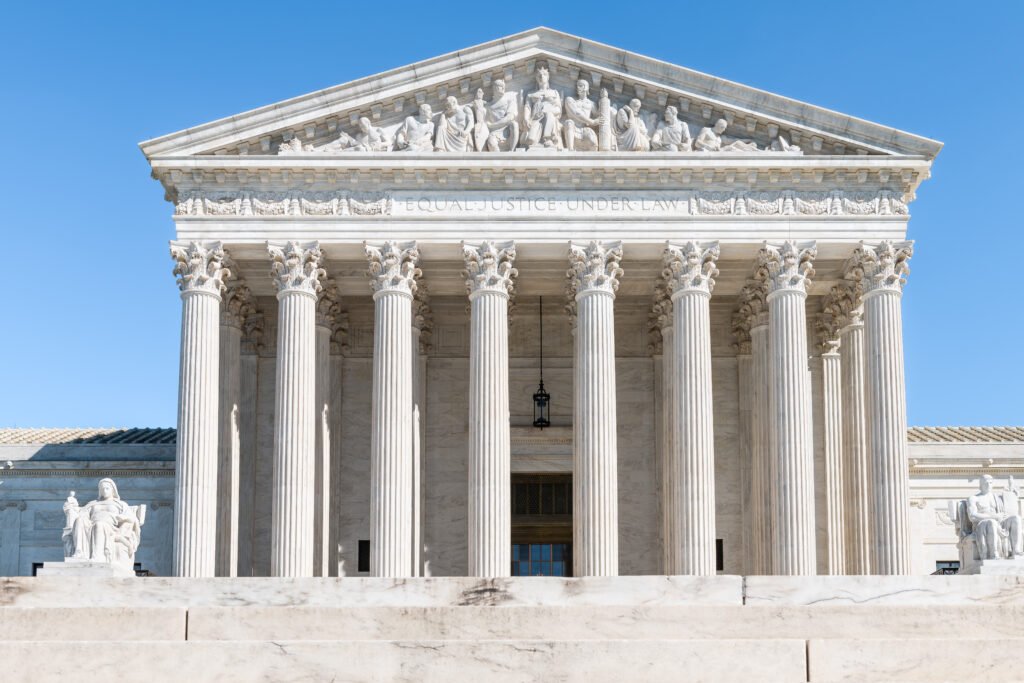
Prediction markets are pricing a 12.5% probability that the Supreme Court of the United States will grant certiorari in a case addressing the regulation of sports event contracts by the end of July 2026. The market has shown stability around this level, with no significant movement over the past 24 hours despite trading volume exceeding $926,000. This modest probability suggests traders view Supreme Court intervention on this specific issue as unlikely within the specified timeframe, though not negligible.
Why It Matters
The regulatory status of sports event contracts sits at a critical juncture in U.S. financial and gambling law. The question of whether such contracts constitute derivatives under the Commodity Exchange Act, whether federal regulation preempts state gambling laws, or how federal authorities should treat sports markets offered by licensed exchanges remains unresolved. A Supreme Court ruling could reshape the landscape for sports derivatives trading, which has grown substantially since legalization movements accelerated in recent years. The market's assessment reflects uncertainty about whether a suitable test case will reach the High Court and, if it does, whether justices will find it sufficiently significant or divisive to warrant review.
Key Factors
Several dynamics influence the probability. First, certiorari remains notoriously selective—the Supreme Court receives thousands of petitions annually but accepts roughly 70 cases. For a sports contract case to qualify, it would need to present either a circuit split, significant constitutional questions, or issues of national importance. Currently, litigation on sports derivatives is proceeding through lower courts, but no definitive conflict between appellate courts has crystallized that would compel Supreme Court attention. Second, political appetite for the issue varies; while sports betting regulation has bipartisan interest in some contexts, the specific commodities and derivatives angle may lack the urgency needed to capture docket space. Third, the regulatory agencies themselves—the CFTC and state authorities—may issue clarifying guidance that reduces litigation pressure before a case reaches the High Court.
Outlook
For the market probability to increase substantially, a circuit court decision creating clear conflict with another circuit, or a lower court ruling with substantial economic implications, would likely be necessary. Conversely, administrative guidance or legislative action clarifying the treatment of sports event contracts could render a Supreme Court case moot or less pressing, potentially pushing probabilities lower. Traders should monitor federal appeals court dockets and regulatory developments in the sports derivatives space over the next 18 months; movement in either direction would be driven by concrete legal disputes reaching intermediate appellate courts rather than by market sentiment alone.