Market Overview
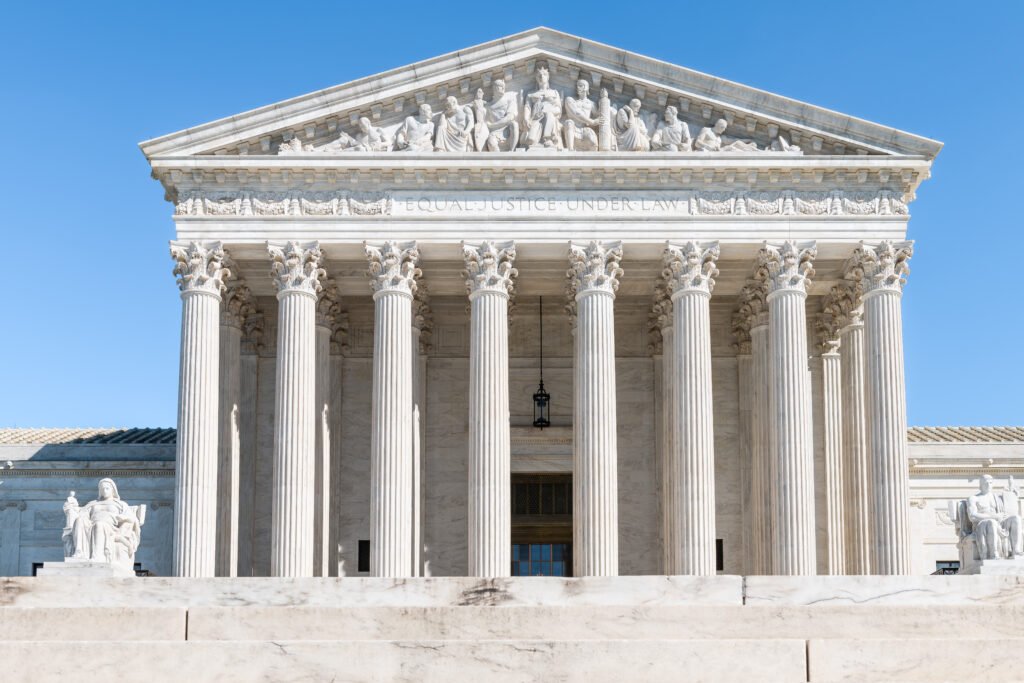
Prediction markets currently price the probability of SCOTUS accepting a case concerning sports event contracts at 13.5%, with stable sentiment over the past 24 hours despite substantial trading volume of $929,259. The market is assessing the likelihood of Supreme Court certiorari within a 19-month window, a timeframe that encompasses both the natural pipeline of appellate decisions and the Court's selective docket management. The narrow probability reflects both the inherent difficulty of securing Supreme Court review and the absence of a clearly ripe case at the appellate level addressing the specific jurisdictional and regulatory questions outlined in the resolution criteria.
Why It Matters
The regulatory status of sports event contracts sits at the intersection of commodity law, gambling regulation, and federalism—three areas where SCOTUS intervention could reshape an emerging market worth billions of dollars. The question hinges on whether contracts tied to sports outcomes constitute derivatives requiring CFTC oversight, whether federal regulation preempts state-level prohibitions, and what authority states retain over contracts offered by federal licensees. A Supreme Court decision could determine the viability of entire business models in sports betting derivatives and settlement-based trading, making certification consequential for market participants, regulators, and the broader fintech ecosystem.
Key Factors
The modest 13.5% probability reflects several structural constraints. First, the Supreme Court accepts fewer than 1% of petitions annually, and commercial law cases—even those involving novel regulatory questions—face steep odds without constitutional significance or a clear circuit split. Second, no case currently appears positioned at the appellate level with the specific factual record and legal questions required by the market's definition. Third, state-level gambling and sports betting regulation has developed primarily through legislative channels and state court litigation rather than federal constitutional challenge, reducing the pathways to federal appellate review. The case must not merely involve sports contracts but explicitly address federalism, commodities classification, or CFTC preemption—a narrow target. Additionally, the 19-month resolution window constrains the probability; even if litigation accelerates, appellate calendars typically span two to three years.
Outlook
For the market probability to shift materially upward, one of two developments would likely be required: either a high-profile appellate decision creating a genuine circuit split on CFTC jurisdiction or federal preemption, or a federal enforcement action against a major platform that generates certiorari-worthy questions. Absent such a catalyst, the market's stable 13.5% assessment suggests skepticism that the conditions for SCOTUS review will coalesce by mid-2026. Observers should monitor developments in ongoing state-level sports betting litigation and any federal regulatory guidance from the CFTC, as either could eventually trigger appellate proceedings with potential for Supreme Court review beyond this market's timeframe.