Market Overview
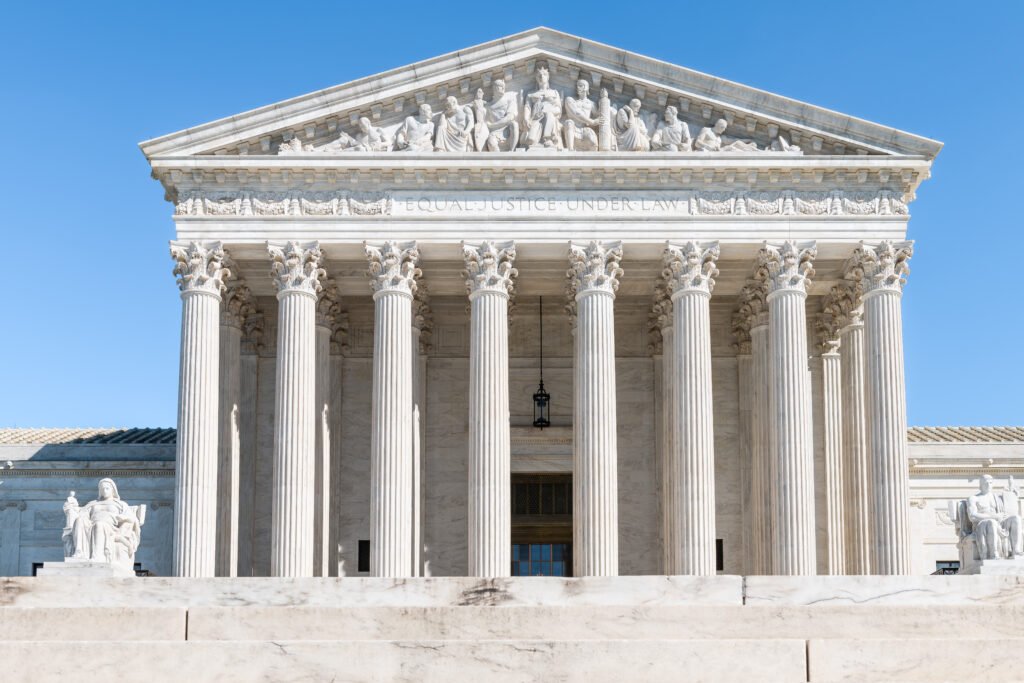
Prediction market traders currently assess a 13.5% probability that the Supreme Court will grant certiorari in a case concerning the regulation of sports event contracts by July 31, 2026. With roughly 18 months remaining until the deadline and over $900,000 in cumulative trading volume, the market reflects measured skepticism about near-term Supreme Court engagement with this issue. The low odds align with baseline expectations: SCOTUS receives approximately 7,000 to 8,000 petitions annually but grants certiorari in only 70 to 80 cases—a grant rate around 1%. For a specialized area like sports betting regulation to reach the Court's docket requires either an unusually compelling legal conflict or a lower court decision deemed sufficiently consequential to warrant review.
Why It Matters
The regulatory status of sports event contracts sits at an intersection of federal and state authority, commodity law, and gambling policy. The Commodity Futures Trading Commission asserts jurisdiction over certain derivatives tied to sporting outcomes, while states maintain their own gambling frameworks. A Supreme Court decision could clarify whether federal commodity regulation preempts state-level restrictions, whether such contracts constitute regulated derivatives under the Commodity Exchange Act, and which level of government retains authority to permit or prohibit them. The stakes extend beyond betting enthusiasts to financial markets infrastructure, state revenue models, and the scope of federal regulatory power. However, the issue has not yet generated a clear circuit split or a landmark lower court decision that would typically trigger SCOTUS interest.
Key Factors
Several conditions would need to align for certiorari to be granted in this timeframe. First, a federal appeals court must issue a ruling directly addressing one of the three core questions outlined in the market's criteria—commodity classification, preemption, or jurisdictional authority. Such decisions have been sparse; while state and federal courts have occasionally touched on sports betting legality since the 2018 federal prohibition on state sports wagering was repealed, few appellate decisions have squarely tackled the contracts-as-derivatives question. Second, any lower court ruling would need to create genuine circuit disagreement or address an issue deemed sufficiently important to warrant Supreme Court resolution. Third, parties with standing and resources—likely exchanges, betting platforms, or state governments—must file a petition and convince at least four justices to vote for review. The absence of urgent public conflict and the relative youth of state legalization efforts suggest this threshold remains distant.
Outlook
The 13.5% probability implies traders see a meaningful but low-probability path: plausible regulatory disputes could emerge from state licensing decisions, platform operations, or CFTC enforcement actions over the next 18 months, but the likelihood that any such dispute crystallizes into a Supreme Court petition and receives a grant vote remains marginal. The market would likely shift materially upward if a federal circuit court issued a significant ruling on sports contract regulation or if state attorneys general or federal regulators escalated a conflict through litigation. Absent such a catalytic event, the market's current pricing suggests sports betting regulation will develop primarily through legislative and administrative channels rather than appellate courts in the immediate term. Resolution will depend on monitoring federal appellate filings and SCOTUS dockets closely; the narrow criteria—requiring public confirmation via official SCOTUS channels—means ambiguous cases will not resolve affirmatively.