Market Overview
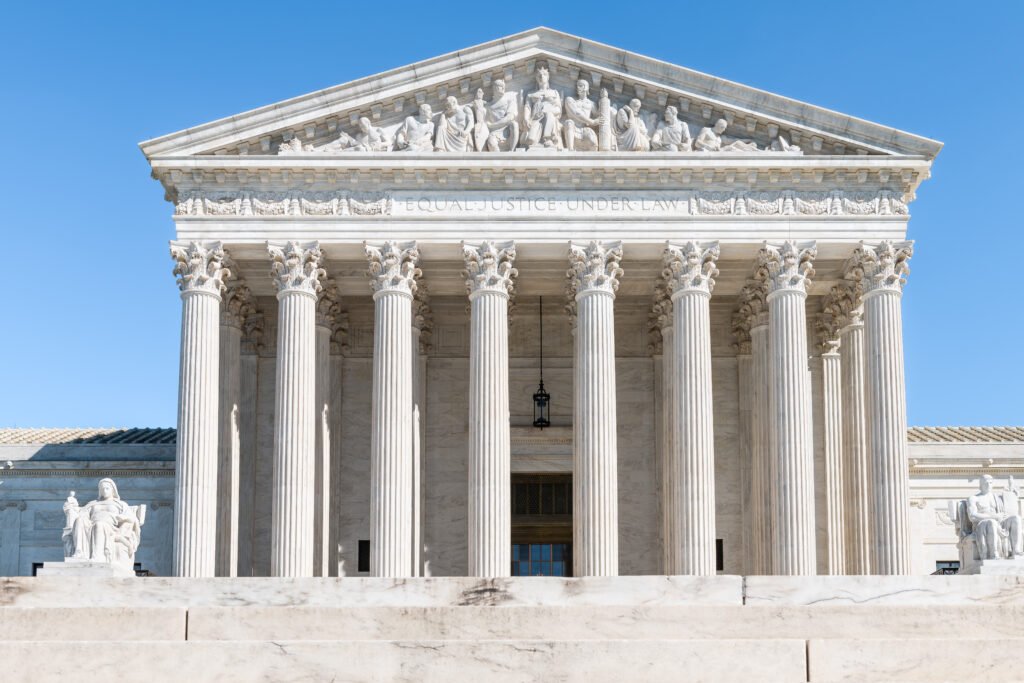
Prediction markets are currently assigning a 12.5% probability to the Supreme Court of the United States granting certiorari in a case explicitly concerning sports event contracts by July 31, 2026. The stable odds over the past day—holding at the same level—suggest a market in equilibrium with no new catalysts driving reassessment. With nearly $927,000 in trading volume, the market reflects meaningful interest among traders despite the low baseline probability, indicating genuine uncertainty about the timing and trajectory of sports betting litigation at the nation's highest court.
Why It Matters
The regulatory status of sports event contracts sits at the intersection of commodities law, state gambling authority, and the expanding landscape of prediction markets and sports betting. The Supreme Court's potential involvement would signal that lower courts have produced conflicting decisions or that the issue has reached sufficient legal and commercial significance to warrant the Court's docket. Such a ruling could reshape how sports betting platforms, derivatives exchanges, and state gambling regulators interact—affecting a multi-billion-dollar industry. The specificity of the market's qualifying criteria suggests traders view this as a genuine open question rather than an inevitable development.
Key Factors
Several dynamics keep the probability modest. First, certiorari cases represent a tiny fraction of petitions filed—the Supreme Court accepts roughly 1-2% of approximately 7,000 annual petitions. Second, a qualifying case must exist and be properly briefed for the Court to consider it. While litigation over sports betting contracts may be underway in lower courts, the petition pathway typically requires appellate decisions, creating a multi-year lag. Third, the Supreme Court tends to prioritize constitutional questions, statutory interpretations of broad national significance, or conflicts between circuit courts. A single jurisdictional or regulatory issue surrounding sports contracts, while commercially important, may not meet that threshold unless framed as implicating federalism or statutory construction of widely applicable law.
Outlook
For the probability to move materially higher, a circuit court would need to issue a precedent-setting decision on one of the three specified questions—whether sports contracts constitute derivatives under the Commodity Exchange Act, whether federal regulation preempts state gambling law, or whether federal licensing can coexist with state restrictions. A split between circuits or a ruling with clear national implications would increase the likelihood of a petition reaching the Court. Conversely, legislative action at the federal or state level could render the question moot or reduce its urgency. Until either a major lower court ruling emerges or explicit signals from the litigation ecosystem point toward Supreme Court engagement, the 12.5% odds reflect the structural difficulty of securing certiorari on a domain-specific regulatory matter within a defined 18-month frame.