Market Overview
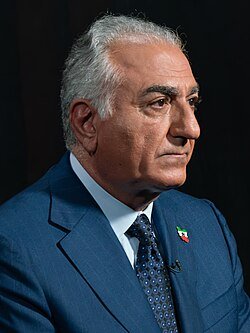
Prediction markets currently assign a 9.5% probability that Reza Pahlavi—the exiled son of Iran's last Shah—will hold and exercise de facto control over Iran's state apparatus by the end of 2026. The market has maintained this probability level consistently, with over $1.1 million in trading volume, indicating sustained interest among participants without sharp recent conviction shifts. The high trading volume relative to the modest probability suggests active debate about the plausibility of regime change, even as the baseline odds remain low.
Why It Matters
Reza Pahlavi represents one potential pathway in discussions of Iran's political future, particularly among opposition groups and foreign analysts who view the Islamic Republic's legitimacy as tenuous. The market's resolution criteria explicitly require de facto governing control—not merely symbolic status, foreign recognition, or exile leadership—making this a measure of actual state power rather than diplomatic acknowledgment. The timeframe of roughly 18 months from now establishes a near-term horizon, focusing attention on whether significant political upheaval could realistically occur within this relatively constrained window.
Key Factors
Several structural factors constrain the probability. Iran's security apparatus—the Islamic Revolutionary Guard Corps, paramilitary forces, and intelligence services—remain deeply entrenched and ideologically committed to the Islamic Republic's foundational principles. Reza Pahlavi has lived in exile since 1979 and commands limited organized domestic support comparable to formal state institutions. Regime change typically requires either external military intervention of a scale not currently evident or internal fracturing severe enough to collapse state capacity—scenarios the low probability reflects as unlikely within 18 months.
Conversely, factors that could elevate the probability include severe economic collapse weakening state capacity, significant military defeat or external pressure, generational leadership transitions creating institutional vacuums, or unanticipated mass mobilization that fundamentally shifts the balance of power. The market's probability of 9.5% implicitly positions these as possible but unlikely, consistent with historical base rates for rapid regime transitions in countries with intact coercive institutions.
Outlook
The stable probability suggests the market has already priced in baseline assessments of Iran's political stability and the obstacles facing any potential challenger. Movements in this market will likely respond to major developments: significant military escalation in the region, unexpected succession crises within Iranian leadership, evidence of security force defections, or dramatic economic shocks that fundamentally alter the state's capacity to govern. The high trading volume indicates this remains an active topic of speculation, even as the quoted odds reflect skepticism about near-term regime change.