Market Overview
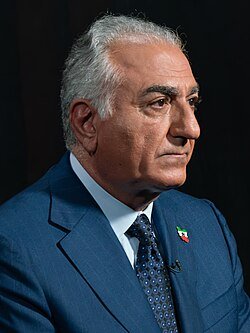
Prediction markets are pricing the likelihood of Reza Pahlavi, son of Iran's last shah, leading Iran by December 31, 2026, at 9.5%—a probability that has remained stable over the past 24 hours despite substantial trading volume of $1.14 million. The market's resolution criteria are deliberately stringent, requiring de facto exercise of governing authority including control over armed forces, national institutions, and executive decision-making, rather than symbolic recognition or foreign support alone. This specificity distinguishes the market from broader discussions of regime change or opposition movements.
Why It Matters
The question touches on one of the Middle East's most consequential geopolitical scenarios: the potential collapse or fundamental restructuring of the Islamic Republic, now in its 45th year. Reza Pahlavi, who has lived in exile since the 1979 revolution, represents continuity with Iran's pre-revolutionary past and is recognized by segments of the diaspora and Iranian opposition as a potential transitional leader. However, the low probability assigned by markets reflects the entrenched nature of Iran's current power structure and the extraordinary circumstances that would be required for such a transition to occur within just over one year. The market's modest volume, while substantial, also suggests this remains a peripheral concern for most traders relative to more immediate geopolitical events.
Key Factors
Several structural obstacles keep the probability subdued. Iran's Islamic Revolutionary Guard Corps (IRGC) and parallel state institutions maintain deeply rooted control over security, economy, and governance, with succession mechanisms designed to perpetuate the system rather than permit outside takeover. Reza Pahlavi lacks an organized military or security force within Iran and would face formidable institutional resistance from entrenched power holders. The timeframe of roughly 13 months is extraordinarily compressed for any scenario short of sudden, catastrophic state collapse—a low-probability event itself. International recognition, though the criteria don't require it, remains limited, and most major powers have shown reluctance to actively support regime change operations. Conversely, internal dissent and economic deterioration in Iran provide background conditions that could theoretically accelerate instability, but these pressures have existed for years without producing fundamental structural change.
Outlook
Market pricing suggests investors view the probability of Pahlavi-led governance emerging by end-2026 as remote but non-negligible. Significant upward movement would likely require either unexpected acceleration of internal Iranian political collapse, explicit military intervention by external powers, or mass defection of security institutions—scenarios currently priced as tail risks. The stability in probability over recent days indicates the market has absorbed available information and settled on a baseline assessment. Developments that could shift this probability upward would include severe escalation in regional conflict drawing external powers into Iran, dramatic fracturing within the IRGC or Supreme Leader's authority, or unprecedented mobilization of opposition movements capable of challenging state monopoly on force. Absent such developments, the 9.5% probability appears to reflect a realistic assessment of structural constraints.