Market Overview
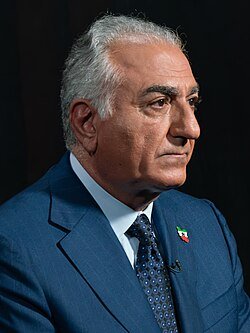
The prediction market on whether Reza Pahlavi will lead Iran by year-end 2026 is pricing the outcome at 9.5% probability, with modest trading volume of $1.14 million suggesting moderate investor interest but not intense conviction on either side. The odds have held steady over the past 24 hours, indicating the market has stabilized around a consensus estimate of remote but non-negligible possibility. For this resolution, Pahlavi would need to exercise genuine governing authority—not symbolic status or foreign recognition—including control over the armed forces, executive institutions, and core decision-making by December 31, 2026.
Why It Matters
Reza Pahlavi, son of the last Shah of Iran, has been a figurehead for Iranian monarchists and regime opponents for decades from exile, particularly in the United States. Any transition to his leadership would represent a fundamental geopolitical shift, signaling potential reversal of the 45-year-old Islamic Republic and reorientation of one of the Middle East's most strategically significant states. Such an outcome would have implications for regional stability, U.S.-Iran relations, nuclear negotiations, and the balance of power in the Persian Gulf. For investors tracking political risk and regime stability, the market reflects broader assumptions about the durability of Iran's current system.
Key Factors
The 9.5% probability embeds several structural realities limiting Pahlavi's near-term prospects. Iran's military and Revolutionary Guard Corps, which control the security apparatus, are deeply embedded in the regime's power structure and ideologically committed to the Islamic Republic rather than monarchical restoration. The Iranian state maintains extensive internal security and surveillance mechanisms that have historically proved difficult to overcome. Additionally, a 12-month timeframe is exceptionally compressed for regime change—most historical transitions of this magnitude require either sustained external military intervention (which major powers show limited appetite for regarding Iran) or prolonged internal unrest that reaches critical mass. Recent protests in Iran, while significant, have not catalyzed regime collapse or created an opening for alternative leadership structures.
Outlook
Market participants appear to be pricing in a small but genuine tail risk: scenarios where internal instability, succession disputes within the current regime, or external conflict could create a power vacuum that monarchist or other opposition forces might exploit. The 9.5% odds suggest traders view such outcomes as plausible but unlikely within the specified timeframe. Developments that could shift the probability upward include major internal security failures, severe geopolitical shocks affecting regime stability, or unexpected succession crises. Conversely, consolidation of power by current Iranian leadership or decisive suppression of dissent would likely push odds lower. The market will likely remain thinly traded unless material geopolitical developments in Iran or the Middle East region alter assessments of regime fragility.