Market Overview
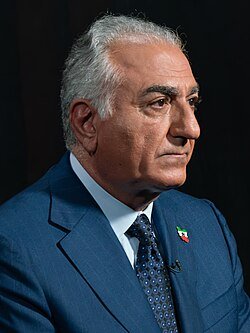
The proposition that Reza Pahlavi, the exiled son of Iran's last shah, will exercise governing authority over Iran by December 31, 2026, is trading at 9.5% probability on prediction markets. With over $1.14 million in volume, the market reflects modest but non-negligible interest in a scenario that would require fundamental political upheaval in the Islamic Republic within approximately 18 months. The stable probability over the past 24 hours suggests the market has settled on a consistent assessment of this low-probability outcome.
Why It Matters
Reza Pahlavi has emerged as a symbolic figurehead for Iranian opposition to the Islamic Republic, particularly among diaspora communities and some segments of the domestic Iranian opposition. His potential ascension would represent not merely a change in leadership but a comprehensive reversal of Iran's post-1979 revolutionary order. The market's pricing reflects recognition that while regime instability exists—evidenced by periodic unrest, economic pressures, and international isolation—the mechanisms for translating such instability into actual state power transfer to an exiled claimant remain extraordinarily difficult. The resolution criteria explicitly require de facto control over military, security services, and state institutions rather than mere symbolic status or foreign backing, a substantially higher bar than nominal recognition.
Key Factors
Several structural impediments constrain the probability. The Islamic Republic's security apparatus, including the Revolutionary Guards and intelligence services, remains institutionally entrenched with interests aligned to the current system. Any transition would likely involve succession within existing power structures rather than wholesale system replacement. The regime has demonstrated capacity to suppress major protest movements, as seen during recent demonstrations. Additionally, international recognition or support—while potentially helpful—is explicitly not required for resolution but also cannot substitute for actual domestic control, meaning external actors cannot simply install Pahlavi without internal institutional capitulation. Conversely, factors that could theoretically elevate the probability include severe military defeat, economic collapse triggering systemic failure, or unexpectedly rapid popular mobilization that overwhelms security forces. The current pricing suggests markets assign meaningful but modest weight to such scenarios within the specified timeframe.
Outlook
The probability is unlikely to shift substantially absent major developments in Iran's domestic political trajectory or dramatic regional events affecting regime stability. Market participants appear calibrated to distinguish between legitimate opposition sentiment—which demonstrably exists—and the far more demanding requirement of actual state power assumption. Any significant movement would likely require either credible reporting of substantive power-sharing negotiations, dramatic security force defections, or visible state institutional breakdown. Absent such developments, the market may remain anchored near current levels, reflecting a consensus that while not impossible, a Pahlavi restoration within the timeframe represents a true tail-risk scenario rather than a meaningfully probable outcome.