Market Overview
The prediction market for whether Reza Pahlavi will lead Iran in 2026 currently stands at 9.5% probability, with steady volume of $1.14 million indicating consistent trader interest. The market has remained stable over the preceding 24 hours, suggesting no recent catalytic event has shifted sentiment materially. This single-digit probability reflects the consensus view that the current Iranian government, led by Supreme Leader Ayatollah Khamenei and President Masoud Pezeshkian, maintains effective control and faces no imminent collapse within the specified timeframe.
Why It Matters
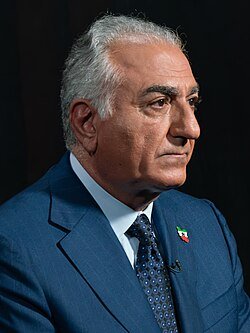
Reza Pahlavi, the exiled son of Mohammad Reza Shah Pahlavi (overthrown in 1979), represents a potential alternative leadership figure that opposition groups and some foreign governments have discussed as a possible post-regime transition figure. The market's resolution criteria explicitly require de facto control over Iran's armed forces, security services, and state institutions—not symbolic exile leadership or foreign recognition. This high bar reflects the substantive nature of the question: whether a meaningful power transfer could occur within approximately 14 months from the market's assessment. The low probability assigned underscores trader skepticism about such a dramatic shift in such a compressed timeframe.
Key Factors
The Iranian regime's institutional depth and monopoly on coercive power remain the dominant factors constraining this probability. The Islamic Revolutionary Guard Corps (IRGC), the security services, and the Supreme Leader's office form an entrenched power structure that has persisted through economic sanctions, regional conflicts, and periodic domestic unrest. For Pahlavi to achieve de facto control, a triggering event—such as widespread civil unrest, military defection, or elite fracture—would be required. Internal Iranian politics currently show no signs of imminent systemic breakdown; while economic hardship and periodic protests occur, institutional loyalty to the current system remains largely intact. Additionally, the geographic distance between Pahlavi's current exile (he resides outside Iran) and centers of power within the country presents a significant logistical barrier. International support, while theoretically helpful, is explicitly not required by the market's resolution criteria, meaning Pahlavi would need demonstrable domestic backing to qualify.
Outlook
The 9.5% probability can be interpreted as traders assigning roughly 1-in-10 odds to a regime transition scenario of sufficient scale to place Pahlavi in effective control within 14 months. This weighting likely reflects low-probability but non-zero scenarios: a security force mutiny, a factional coup within Iran's elite, or acceleration of civil unrest beyond current levels. However, the stability of the probability over the preceding day suggests no near-term developments are shifting expectations. The market will be sensitive to any news regarding Iranian domestic political instability, succession dynamics within the IRGC or government, or credible reports of opposition mobilization. Barring such developments, this probability is likely to remain in the single-digit range, as the structural factors supporting regime continuity—institutional control, absence of viable internal challengers, and demonstrated resilience—show no sign of fundamental weakening.