Market Overview
Prediction markets are pricing the probability of Reza Pahlavi leading Iran by December 31, 2026 at 9.5%, with market depth evidenced by $1.14 million in trading volume. This represents a meaningful but decidedly long-shot scenario. The resolution criteria explicitly require de facto governing authority—effective control over armed forces, executive institutions, and decision-making—rather than symbolic status, foreign recognition, or exile leadership without domestic power. The market distinguishes between genuine state control and alternative forms of political status that would not qualify.
Why It Matters
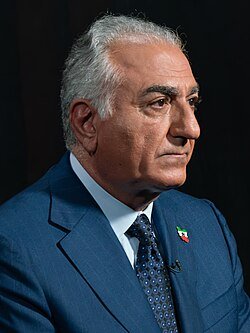
Reza Pahlavi represents one potential outcome in Iran's complex political future. As the eldest son of Shah Mohammad Reza Pahlavi, who was overthrown in 1979, he has become a symbolic figure for opposition groups and pro-monarchy elements both inside and outside Iran. Any scenario in which he would assume actual governing control would require either a significant rupture within Iran's power structures or external intervention—extraordinary conditions that the 9.5% probability reflects as possible but improbable within the two-year timeframe. The market serves as a gauge of how traders assess the stability of Iran's current regime and the viability of opposition alternatives.
Key Factors
Several structural barriers constrain the probability. Iran's Islamic Republic possesses entrenched institutional power through the Islamic Revolutionary Guard Corps, the Supreme Leader's office, and a security apparatus deeply integrated into state functions. The military and security establishment remain loyal to the current system, making internal overthrow difficult. Additionally, no broad consensus exists among Iran's fractious opposition movements around Pahlavi's leadership; many dissidents pursue alternative visions for Iran's governance. The two-year window is compressed; significant regime change typically requires sustained internal pressure or external catalysts that would need to materialize quickly. International recognition is explicitly not required by the resolution criteria, but practical exercise of state control would necessitate either the acquiescence of existing power holders or their removal.
Outlook
The 9.5% figure suggests traders view Pahlavi's path to power as theoretically possible under disruptive scenarios—such as severe regime collapse, major military defeat, or unprecedented internal schism—but regard these outcomes as unlikely within 24 months. Developments that could shift market odds include significant escalation of internal unrest, major geopolitical crises affecting Iran, major defections within Iran's security establishment, or concrete indications of organized opposition consolidation around Pahlavi. Conversely, stabilization of Iran's government or fracturing of opposition unity could pressure probabilities lower. The market will likely remain sensitive to news regarding Iran's internal political stability and opposition organization, though structural factors suggest single-digit probabilities will persist absent major catalysts.