Market Overview
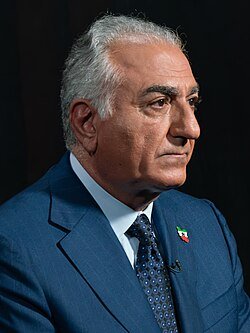
Prediction markets are currently assigning a 9.5% probability that Reza Pahlavi, heir to Iran's pre-1979 Pahlavi throne, will exercise effective governing authority over the Iranian state by December 31, 2026. With over $1.14 million in trading volume, the market reflects meaningful engagement from participants assessing the feasibility of a dramatic political transition in one of the Middle East's most strategically significant nations. The probability has remained stable over recent trading, indicating a lack of consensus around near-term catalysts for regime collapse.
Why It Matters
A Pahlavi return to power would represent one of the most significant geopolitical reversals in modern history—a reversal of the 1979 Islamic Revolution that fundamentally reshaped Iran's domestic and foreign policy. Such an outcome would reshape regional power dynamics, potentially alter Iran's nuclear posture, military alliances, and stance toward the West. For market participants, the question encapsulates fundamental assumptions about regime stability, the probability of civil upheaval escalating to state collapse, and whether exiled opposition movements retain sufficient domestic legitimacy to reconstitute state authority.
Key Factors
The market's single-digit probability reflects multiple structural impediments to this scenario. The Islamic Republic maintains a consolidated security apparatus, including the Revolutionary Guards Corps, which has demonstrated capacity to suppress significant domestic unrest, most recently during 2022-2023 protests. Reza Pahlavi, based in the United States, lacks established governing institutions, military command structures, or demonstrable control over security forces—prerequisites the resolution criteria explicitly require. The resolution definition excludes mere international recognition or symbolic status, demanding de facto control of armed forces, executive institutions, and core state infrastructure. Additionally, Iran's succession landscape includes competing power centers within the clerical establishment and military, making a monarchical restoration unlikely even in scenarios where existing regime structures weaken. Historical memory of Pahlavi-era authoritarian governance and the deep institutional embedding of Islamic Republic ideology further reduce the likelihood that a successor state would spontaneously organize around a return to monarchy.