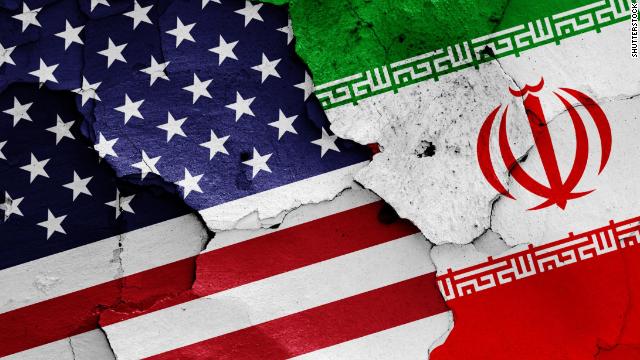
Market Overview
The prediction market assessing the likelihood of active US military personnel entering Iranian territory by year-end has stabilized at a 99.3% probability for \"No,\" with $17.9 million in trading volume. This implies traders assign only a 0.7% chance of direct US military ground incursion into Iran within the remaining timeframe. The market has shown no movement in the past 24 hours, indicating a settled consensus among participants on this low-probability scenario.
Why It Matters
A direct US ground invasion or military entry into Iran would represent a dramatic escalation in US-Iran relations and could fundamentally reshape Middle Eastern geopolitics. Such an action would likely trigger regional conflict involving Iranian allies, disrupt global energy markets, and have significant implications for US military commitments elsewhere. The market's pricing reflects the substantial political, military, and diplomatic barriers to such an extreme scenario, even as US-Iran tensions periodically spike over nuclear diplomacy, proxy conflicts, and regional influence.
Key Factors
Several factors support the market's overwhelming skepticism about direct US entry into Iran. First, the criteria explicitly exclude diplomatic visits, military advisors, and special operations—narrowing the resolution to a scenario involving actual combat or contested military incursion. Second, historical precedent suggests the US has preferred proxy engagement and air operations over ground invasion in Iran for decades. Third, the geopolitical costs would be substantial: potential casualties, international condemnation, and resource demands incompatible with existing US commitments in the Middle East and elsewhere.
The market's confidence also reflects structural constraints on escalation. Any direct US ground entry would require explicit authorization and would face domestic political opposition. Intelligence operations, which are excluded from the resolution criteria, represent the primary mode of US-Iran military engagement. Recent years have seen tensions managed through targeted strikes, cyberoperations, and sanctions rather than ground incursions.
Outlook
For the market's \"Yes\" side to materialize, a catalyst of extraordinary magnitude would be needed—such as a direct Iranian attack resulting in mass US casualties, or a sudden collapse of diplomatic channels combined with critical regional developments. The current 0.7% residual probability likely reflects tail-risk scenarios rather than any assessed baseline trajectory. With limited time remaining in the year, absent a major unforeseen incident, traders expect the market to resolve to \"No.\" Any shift in this probability would likely correlate with dramatic news from the region or unexpected escalation in US military posture against Iran.