Market Overview
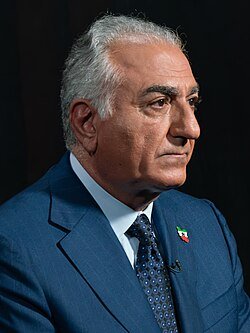
The prediction market on Reza Pahlavi's potential leadership of Iran prices the probability at 9.5%, unchanged over the past 24 hours, with relatively substantial trading volume of $1.14 million. This represents a scenario in which the son of the last Shah would need to achieve de facto governing control—including command of the armed forces, state institutions, and executive decision-making—within approximately 12 months. The market's definition explicitly excludes symbolic status, foreign recognition without domestic authority, or exile leadership without effective control, establishing a high threshold for resolution.
Why It Matters
Iran's political system remains one of the world's most autocratic and insular. Power is concentrated within the Supreme Leader (currently Ayatollah Khamenei), the Revolutionary Guards (IRGC), and a network of clerical institutions established after the 1979 revolution. Any transition involving a royalist successor to the Pahlavi dynasty would represent not merely a change in personnel but a fundamental rupture with the Islamic Republic's foundational ideology and power structures. The low probability reflects the market's assessment that such a transition is highly unlikely within the specified timeframe.
Key Factors
Several structural factors explain the market's pricing. First, Iran's institutional architecture is designed to prevent concentration of power in any single individual outside the Supreme Leader framework. Second, Reza Pahlavi has been living in exile since the 1979 revolution and maintains no known operational power base within Iran, limiting pathways to sudden authority. Third, any assumption of power would require either a military coup, popular insurrection, or external intervention—scenarios the market appears to assign low probability within 12 months. Fourth, while economic hardship, regional tensions, and factional disputes within Iran's system create periodic instability, these have not historically translated into regime collapse or fundamental structural change. The market's price suggests that traders view the Islamic Republic's institutional resilience as likely to persist through 2026.
Outlook
The probability could shift materially if credible reporting emerged of organized domestic movements mobilizing around Pahlavi, significant IRGC or military defections, extraordinary deterioration in Iran's economic or security situation, or major regional events destabilizing the regime. Conversely, continued consolidation of clerical power or resolution of internal Iranian factional disputes within existing institutional frameworks would likely reinforce the current low probability. Given the market's focus on de facto governing control—not theoretical possibility—the 9.5% figure suggests traders view near-term Iranian political transition as marginal.