Market Overview
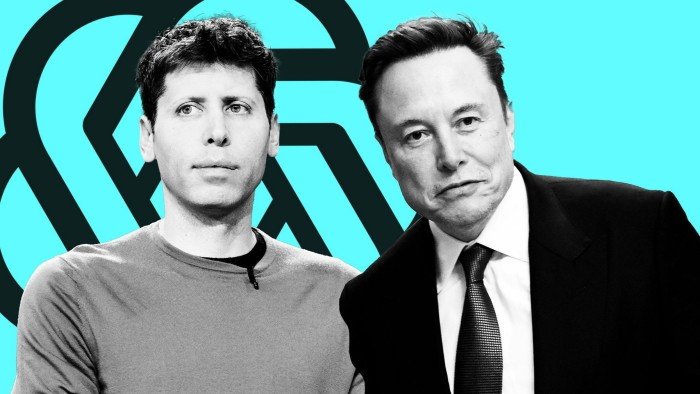
Prediction market participants are pricing Elon Musk's chances of winning his case against Sam Altman and co-defendants at 37%, implying roughly two-to-one odds against a favorable outcome for the Tesla and X CEO in the U.S. District Court for the Northern District of California. The market has maintained this probability level over the past day despite $196,442 in trading volume, indicating stable market consensus rather than shifting sentiment. The resolution framework requires either a monetary award favoring Musk, a judicial determination favoring his claims relative to opposing claims, or a settlement with disclosed net payment to Musk—a stringent set of criteria that likely contributes to the modest probability assessment.
Why It Matters
The Musk-Altman dispute centers on allegations related to OpenAI's governance and strategic direction, matters with significant implications for AI industry leadership and corporate accountability. Altman co-founded OpenAI with Musk in 2015 before the two had a public falling out in late 2024. The litigation outcome could establish precedent regarding fiduciary duties, non-compete agreements, and shareholder claims in AI enterprises, while also influencing broader perceptions of executive conduct in the sector. Given Musk's prominence as a public figure and investor, the case has attracted considerable attention beyond legal circles.
Key Factors
Several dynamics underpin the current 37% probability. First, the burden of proving claims to a federal judge's satisfaction remains substantial, particularly when the defendant holds significant influence and resources. Second, the market's resolution criteria are deliberately exacting—Musk must demonstrate not only that he has merit but that his net monetary recovery or primary claim success exceeds that of the opposing parties. This threshold naturally depresses win probability, as partial victories or settlements with ambiguous terms resolve to \"No.\" Third, settlement remains a realistic outcome in high-stakes litigation, and the market's treatment of sealed settlements as failures for Musk creates an incentive for traders to discount full trial victories. Finally, the December 31, 2026 deadline provides roughly two years for resolution, which may be tight for complex commercial litigation but is not exceptionally constraining.
Outlook
The probability assessment reflects genuine uncertainty about both the merits and the procedural pathway forward. Should material discovery produce evidence strongly supporting Musk's allegations, or should Altman's legal position weaken during motion practice, market odds could shift upward. Conversely, early judicial rulings dismissing significant claims, summary judgment favoring defendants, or momentum toward a settlement without net payment to Musk could lower the probability further. Traders should monitor for filing developments, motion rulings, and any public statements regarding settlement discussions, as each may signal shifting judicial receptiveness to Musk's claims.