Market Overview
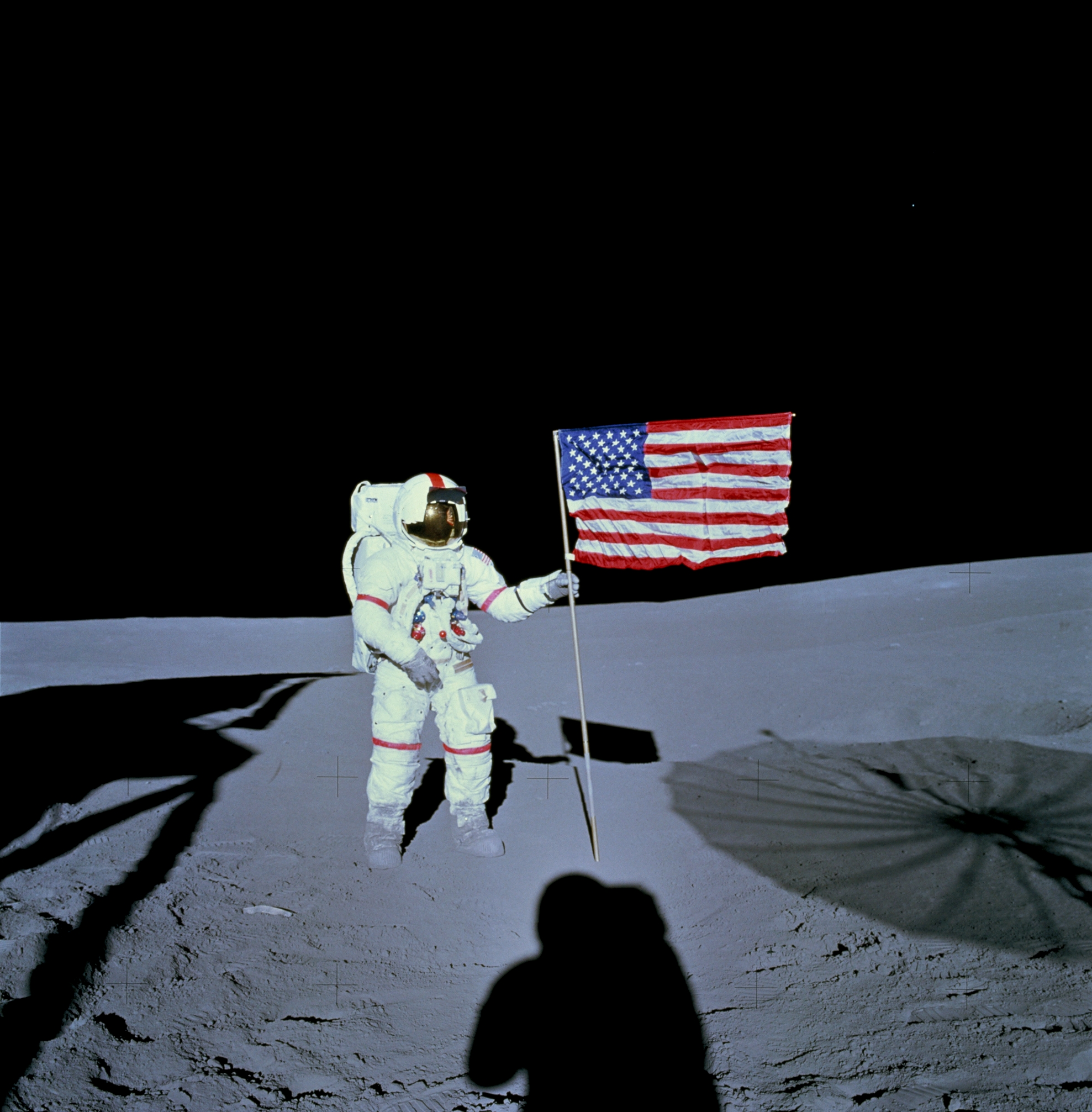
Prediction markets are currently pricing a human moon landing in 2026 at 4.3% probability, with modest trading volume of roughly $1.9 million indicating moderate investor interest. The stable odds over the past 24 hours suggest little new information has shifted expectations. This low probability reflects widespread skepticism about humanity's near-term ability to return humans to the lunar surface, despite decades of technological advancement and sustained investment in space exploration.
Why It Matters
A crewed moon landing represents one of humanity's most technically demanding and symbolically significant achievements. Successfully landing astronauts on the moon by 2026 would require overcoming substantial engineering, regulatory, and operational hurdles while executing a mission profile that remains untested in practice. The low market probability underscores both the genuine complexity of lunar missions and the current gap between space program ambitions and realistic timelines. For investors and space industry observers, this market serves as a benchmark for assessing the credibility of near-term lunar objectives announced by government agencies and private companies.
Key Factors
The dominant factor constraining 2026 feasibility is NASA's Artemis program, the primary vehicle for U.S. crewed lunar missions. Artemis I, an uncrewed test flight, experienced significant delays and did not launch until November 2022—years behind its original schedule. Artemis II, a crewed lunar flyby mission, has subsequently been pushed back, with current estimates placing it no earlier than 2025 or 2026 at the earliest. Even if Artemis II launches on schedule, it would only circle the moon without landing. Artemis III, the actual landing mission, is now anticipated to occur in the late 2020s or early 2030s, well beyond the 2026 deadline in this market.
No other spacefaring nation or private entity has announced a realistic crewed lunar landing capability for 2026. China's lunar ambitions, while advancing steadily, are focused on robotic missions and sustained infrastructure development rather than crewed landings in the near term. Private companies like SpaceX are developing lunar landers as part of NASA's Artemis program, but these remain dependent on Artemis III scheduling. The convergence of these factors—technical delays, engineering complexity, and absence of alternative pathways—explains the market's assessment that 2026 landings are an extreme outlier scenario.
Outlook
For the 4.3% probability to shift materially higher, several developments would be necessary: an unexpected acceleration of Artemis II followed by rapid Artemis III deployment, a breakthrough announcement from another spacefaring entity committing to a 2026 crewed landing, or evidence that private companies have developed viable lunar lander capabilities ahead of current expectations. Conversely, further delays to Artemis II or formal announcements extending Artemis III timelines could push the probability lower. Given the institutional momentum of current space programs and historical patterns of timeline extension in complex aerospace projects, the market's skepticism appears well-grounded in technical and programmatic reality.