Market Overview
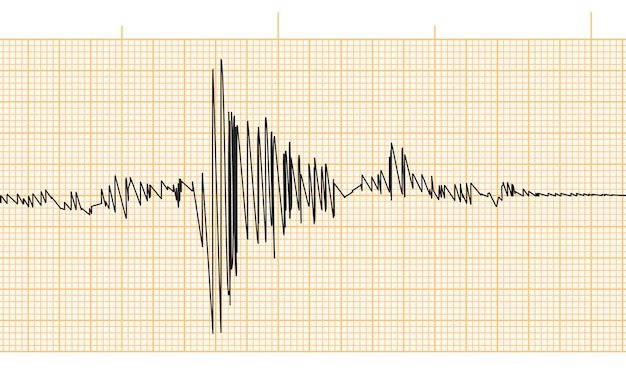
Prediction markets are pricing a magnitude 10.0 or greater earthquake occurring between December 8, 2025 and December 31, 2026 at 5% probability, according to current odds. The market has shown stability around this level over the past day, with $589,842 in trading volume indicating modest but steady interest. Resolution will be determined by the United States Geological Survey Earthquake Hazards Program, the authoritative source for global seismic data.
Why It Matters
A magnitude 10.0 earthquake would be unprecedented in recorded seismic history. The largest earthquake ever recorded was the 1960 Great Chilean Earthquake at magnitude 9.5, which triggered a massive tsunami and killed an estimated 1,655 people. The logarithmic nature of the Richter scale means that a magnitude 10.0 event would release roughly 32 times more energy than the Chilean quake. Understanding market estimates for such extreme tail-risk events provides insight into how traders weigh the possibility of rare but catastrophic natural disasters.
Key Factors
The 5% probability reflects several considerations. Seismological evidence suggests that Earth's largest subduction zones—where the deepest, most energetic earthquakes occur—have physical limitations that make magnitude 10.0 events extremely unlikely. Plate rupture areas would need to be implausibly large, and stress accumulation patterns observed in tectonic regions do not support expectations of such extreme events in the near term. The timeframe of just 14 months further constrains the odds, as major earthquakes follow no predictable schedule. However, genuine scientific uncertainty remains about the upper bounds of possible seismic magnitude, and one modeling study published in 2023 suggested theoretical mechanisms by which magnitude 10.0 events could occur under certain conditions, providing some foundation for the non-zero probability.
Outlook
Market odds are likely to remain stable unless significant new seismic activity or scientific findings emerge. A major earthquake exceeding magnitude 8.5 anywhere globally could increase uncertainty and push odds slightly higher, as it would demonstrate that tectonic conditions are more energized than baseline assumptions. Conversely, the market's probability may reflect a scientific consensus-weighted view that accounts for tail-risk scenarios while maintaining skepticism about the plausibility of magnitude 10.0 events. For bettors, this market effectively prices conviction that such an earthquake remains extraordinarily unlikely within the specified window.