Market Overview
Prediction markets are pricing a magnitude 10.0 or above earthquake before the end of 2026 at roughly 5 percent probability, with modest trading volume of approximately $589,842. The market window runs from December 8, 2025 through December 31, 2026, with resolution based on USGS data. The stable odds over the past 24 hours suggest the market has reached an equilibrium view on this low-probability event.
Why It Matters
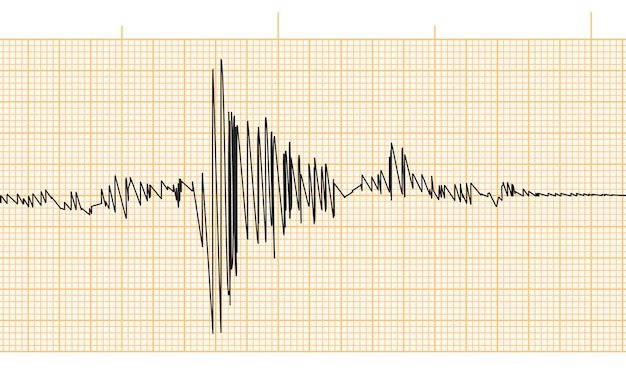
A magnitude 10.0 earthquake would represent a seismic catastrophe of unprecedented scale in the modern record. The largest earthquake ever recorded—the 1960 Great Chilean earthquake—measured 9.5 on the moment magnitude scale. An event of magnitude 10.0 would release roughly 30 times more energy than the Chilean quake and would cause global devastation including massive tsunamis, widespread destruction across continents, and potential cascading infrastructure failures. The rarity of such events makes them theoretically important to seismic science but practically unlikely within any short timeframe.
Key Factors
The 5 percent probability reflects two competing considerations. On one hand, seismologists understand that the Earth's tectonic plates are continuously moving and stress accumulation is inevitable in subduction zones and other high-risk areas. Theoretically, a magnitude 10.0 event could occur anywhere on Earth without warning. On the other hand, the complete absence of such events in instrumental records spanning roughly 120 years suggests they occur far less frequently than smaller major earthquakes. The probability distribution of earthquake magnitudes follows a well-established pattern known as the Gutenberg-Richter relation, which predicts magnitude 10.0 events would occur at intervals measured in many thousands of years or longer. Some seismic research suggests the physical limitations of lithospheric rocks may make magnitudes above 9.6 or 9.7 physically impossible, though this remains scientifically debated.
The market's 5 percent allocation also likely accounts for epistemic uncertainty—the possibility that current understanding of earthquake physics is incomplete or that exceptional circumstances could produce an unprecedented event.
Outlook
Shifts in market probability would most likely follow new scientific findings about earthquake potential in specific regions, detection of unusual seismic precursor activity in major subduction zones, or developments in understanding the upper limits of earthquake magnitude. Absent dramatic seismic developments, the market odds will probably remain in the low single-digit range through 2026, reflecting the low but nonzero tail risk inherent in a dynamic planetary system.