Market Overview
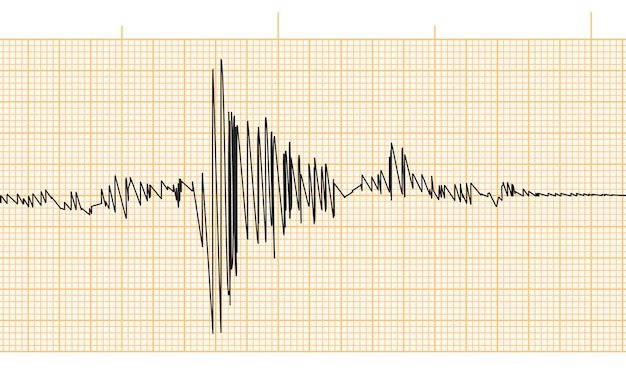
Prediction markets currently assess the likelihood of a magnitude 10.0 or greater earthquake occurring anywhere on Earth between December 8, 2025, and December 31, 2026, at 5.0%, with $589,842 in trading volume. This pricing has remained stable, indicating broad market agreement on the improbability of such an extreme seismic event. The market uses the United States Geological Survey's Earthquake Hazards Program as its resolution source, with provisions for delayed reporting and potential magnitude revisions in the 24 hours following any qualifying event.
Why It Matters
A magnitude 10.0 earthquake would represent a civilization-altering geological event with catastrophic global consequences. No earthquake of this magnitude has been recorded in modern seismic history; the largest instrumentally recorded earthquake occurred in Chile in 1960 at magnitude 9.5. Understanding how prediction markets price truly extreme tail-risk scenarios provides insight into how traders handle events with minimal historical precedent and predominantly theoretical risk profiles. The market also reflects public interest in natural disaster preparedness and geophysical risk assessment.
Key Factors Driving the 5% Probability
The 5% odds reflect several constraining factors. Seismologists have established that magnitude 10.0 events are theoretically possible but extraordinarily rare on geological timescales spanning millions of years. Earth's largest fault zones—such as those in subduction regions around the Pacific Ring of Fire—have maximum rupture lengths and slip rates that make magnitude 10.0 events extremely improbable within any single-year window. The 13-month timeframe in question makes the event even less likely than longer-duration scenarios. Some residual probability may be allocated to unknown geological variables or unmodeled seismic risks, but the baseline remains anchored to seismological consensus that such events occur at frequencies far longer than decadal timescales.
Outlook
The stability of the market probability around 5% suggests traders view this as approaching a floor—the minimum odds warranted by scientific uncertainty and tail-risk hedging rather than genuine expectation. Significant probability shifts would likely require either discovery of previously unknown major fault systems or substantial revisions to seismic hazard models. Conversely, if the market window closes without a magnitude 10.0 event, traders may reduce odds further in similar future markets, reflecting accumulated evidence that the true frequency is even lower than current pricing implies. The market will remain sensitive to any major earthquakes (magnitude 8.0+) that trigger discussions about whether magnitude 10.0 events are more imminent than previously understood.