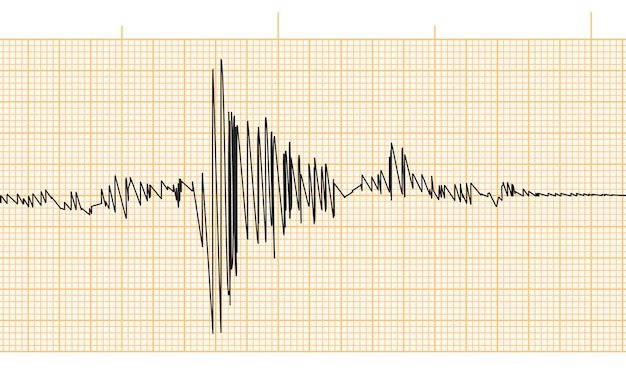
Market Overview
Prediction markets are pricing the probability of a magnitude 10.0 or greater earthquake occurring between December 8, 2025 and December 31, 2026 at 5.7%, based on approximately $530,000 in trading volume. The market has remained stable at this level over the past 24 hours, suggesting a consensus view among participants. Resolution will be determined by the United States Geological Survey's Earthquake Hazards Program, with a 24-hour window for magnitude revisions following any qualifying event.
Why It Matters
A magnitude 10.0 earthquake would represent an unprecedented seismic event in modern recorded history. The largest earthquake ever measured was the 1960 Great Chilean Earthquake at magnitude 9.5. The energy released by a magnitude 10.0 event would be roughly 32 times greater than the 9.5 Chilean quake, with potentially catastrophic global consequences including massive tsunamis, widespread structural devastation, and severe secondary effects. Understanding how markets price the probability of such extreme events provides insight into how participants balance historical seismic data against tail-risk scenarios.
Key Factors
The 5.7% probability reflects several scientific constraints. Seismic moment magnitude follows a logarithmic scale; each full magnitude unit represents approximately a 32-fold increase in energy release. The physical limits of Earth's lithosphere—specifically the length and stress accumulation capacity of fault zones—suggest that magnitudes above 9.5 to 9.7 become progressively less probable. No observed subduction zone or fault system has demonstrated the capacity to accumulate and release the enormous strain energy required for a magnitude 10.0 event. Additionally, the one-year timeframe of the market is comparatively short relative to the geological timescales over which such events might theoretically occur.
Outlook
The probability would likely shift only if significant new seismic activity fundamentally challenged understanding of Earth's fault mechanics or if a major precursor event dramatically altered risk assessments. Conversely, if the 2026 period passes without a magnitude 10.0 earthquake—which historical precedent strongly suggests it will—the market would resolve to \"No\" and the question would settle the persistent scientific consensus that such magnitudes remain at the extreme edge of seismic possibility.