Market Overview
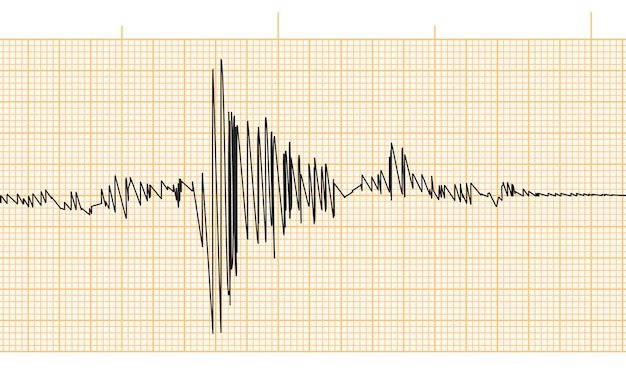
Prediction market participants are currently pricing the probability of a magnitude 10.0 or higher earthquake occurring between December 8, 2025 and December 31, 2026 at 5.4%, according to the market's latest odds. The probability has ticked upward 1 percentage point over the past day, reflecting the market's ongoing assessment. With $582,348 in trading volume, the market has attracted meaningful participation despite the low probability assigned to the event.
Why It Matters
A magnitude 10.0 earthquake would represent an unprecedented seismic event in recorded history. The largest earthquake ever recorded was the 1960 Great Chilean Earthquake, measured at magnitude 9.5 on the moment magnitude scale. A magnitude 10.0 event would release roughly 32 times more energy than the Chilean quake and would cause catastrophic damage across multiple continents, triggering devastating tsunamis and triggering secondary geological disasters. Understanding how prediction markets price geological tail risks—events with catastrophic consequences but extremely low historical probability—offers insight into how traders value scientific uncertainty.
Key Factors
The 5.4% probability substantially exceeds what seismological science would suggest. The theoretical maximum magnitude for Earth earthquakes, constrained by the size and strength properties of tectonic plates, is estimated by most seismologists to fall in the 9.5 to 9.8 range. No known geological mechanism would reliably produce a 10.0 magnitude event. However, the market's probability may reflect several considerations: residual uncertainty about Earth's tectonic limits, the possibility of unknown fault systems, the inherent difficulty in predicting rare events, and potential ambiguity in magnitude measurement and revision protocols. The market structure itself may also contribute to elevated odds, as traders may price in the 24-hour review window during which magnitudes can be revised upward—though such revisions from confirmed 9.5+ events to 10.0 would contradict established seismological understanding.
Outlook
The market's probability could shift based on several developments. A major earthquake in the 9.0+ range during the market period would likely trigger traders to reassess the tail risk of magnitude revision to 10.0, potentially driving odds higher temporarily before the 24-hour confirmation window closes. Conversely, the absence of any earthquake above magnitude 8.5 during the period would likely compress odds toward the lower end, as traders update on the realized frequency of major seismic events. Scientific publications offering new constraints on maximum possible magnitudes could also influence prices. Barring a genuine paradigm shift in seismological understanding, the market's current 5.4% pricing reflects a premium above scientific baseline—a common pattern in prediction markets for low-probability, high-impact events where uncertainty and media attention can elevate odds beyond observed frequencies.