Market Overview
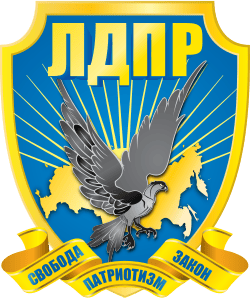
The prediction market for the Liberal Democratic Party of Russia (LDPR) to win the most seats in the 2026 Russian State Duma election currently stands at 5.1%, unchanged over the past 24 hours despite substantial trading volume of $2.2 million. This low probability reflects the structural disadvantages facing even established opposition and nationalist parties in Russia's political system, where the dominant United Russia party consistently secures pluralities through mixed electoral rules combining proportional and single-mandate district voting.
Why It Matters
Russian parliamentary elections serve as a barometer of public sentiment within the constraints of a managed political environment. The LDPR, led by Vladimir Zhirinovsky until his death in 2022 and now by Leonid Slutsky, has historically positioned itself as a nationalist alternative to the Kremlin's United Russia party while remaining within the approved political establishment. Whether the LDPR can consolidate enough support to become the largest faction would signal significant shifts in Russian domestic politics, though such an outcome appears highly improbable under current conditions.
Key Factors
The LDPR's 5% odds reflect several entrenched realities. United Russia has dominated every recent Duma election, most recently securing approximately 49% of seats in 2021, while the LDPR typically captures 5-11% of the popular vote. The party's nationalist appeal attracts a specific voter base but lacks the broad organizational infrastructure and institutional backing that benefits the Kremlin-backed United Russia. Additionally, Russia's electoral system—which allows administrative pressure on voters and gerrymandering through single-mandate districts—systematically advantages the ruling party. The LDPR would need to overcome substantial structural headwinds, demographic shifts, or significant political realignment to become the plurality winner.
Outlook
Market participants appear to view an LDPR plurality as a tail-risk scenario, consistent with historical patterns and the party's mid-tier positioning in Russian politics. Developments that could meaningfully shift these odds would include unexpected fractures within United Russia's coalition, massive shifts in voter mobilization following geopolitical developments, or changes to electoral rules. Absent such disruptions, the market's current assessment suggests the LDPR will maintain its role as an established but secondary political force rather than ascend to the largest-party position in the 2026 elections.