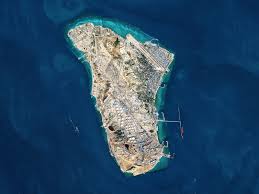
Market Overview
Prediction markets are currently assigning a 10.5% probability to a scenario in which Iran loses primary governmental or military control of Kharg Island by the end of May 2026. With approximately $3.8 million in trading volume, the market reflects modest but meaningful engagement from traders pricing this low-probability outcome. The stability of the odds over the past 24 hours suggests the market has reached an equilibrium assessment of the likelihood of such a significant geopolitical disruption.
Why It Matters
Kharg Island is one of Iran's most strategically important pieces of infrastructure, hosting critical oil export terminals that have historically accounted for a substantial portion of the country's crude oil shipments. The island represents not merely economic assets but also a key symbol of Iranian sovereignty in the Persian Gulf. Any loss of control would signal a major military defeat or diplomatic capitulation, making the question relevant to assessments of regional stability, potential conflict escalation, and the balance of power in one of the world's most critical energy-producing regions.
Key Factors Driving Low Probability
The market's 10.5% odds reflect several structural realities that make a change in control highly improbable in the 18-month window. First, Kharg Island is within Iran's territorial waters and airspace, making an invasion or occupation logistically challenging for any potential adversary without a broader conflict context. Second, the resolution criteria require not merely temporary disruption—bombardment, raids, or offshore naval presence do not qualify—but rather the establishment of actual, sustained control by another state or occupying force. This high evidentiary bar means isolated military strikes, even damaging ones, would not resolve the market to \"Yes.\" Third, there is no active military campaign currently directed at seizing the island, nor credible public discussion among potential adversaries of plans to do so. Any scenario in which Iran loses control would likely require either a wider regional war or a negotiated settlement, neither of which is priced as imminent.
Outlook and Potential Catalysts
For the \"Yes\" outcome to materialize, one of several major developments would need to occur: a significant escalation in regional conflict involving direct attacks on Iranian infrastructure and territory, resulting in a loss of Iranian military capability to defend the island; a broader geopolitical realignment arising from negotiations, ceasefire agreements, or settlement terms that explicitly transfer control; or an internal collapse of Iranian state control. Each scenario carries political and military complexities that render them unlikely but not impossible. Traders should monitor any significant uptick in regional tensions, changes in sanctions regimes, or diplomatic statements regarding control of Persian Gulf territory. The market's current pricing suggests that while such an outcome is non-negligible, the consensus view heavily favors continued Iranian control.