Market Overview
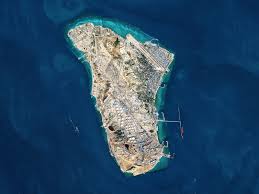
The prediction market on Iranian control of Kharg Island has stabilized at a 7.5% probability of the island changing hands by May 31, 2026, with substantial trading volume of $4 million indicating serious participant engagement with the question. The market definition requires actual establishment of control by another state or occupying force—not merely temporary military actions, bombardment, or announced claims—setting a high bar for resolution to \"Yes.\" This stringent standard likely contributes to the low odds, as it excludes scenarios involving raids or damage without sustained territorial control.
Why It Matters
Kharg Island serves as a critical infrastructure hub for Iranian oil and gas exports, hosting major storage facilities and export terminals. Control of the island represents both a strategic asset and a symbolic position in regional geopolitics. The question's resolution hinges on whether the ongoing regional conflict dynamics—primarily the Israel-Iran tensions and broader Middle East instability—could escalate to the point of a major military operation capable of wresting control from Iran. The island's significance makes it a potential target in any major regional confrontation, yet its capture would require sustained military effort and the capacity to hold territory against Iranian counterattack.
Key Factors
Several structural factors support the market's skepticism about control change. First, Iran maintains substantial military presence on Kharg Island, including air defense systems and naval capabilities, making amphibious assault or aerial capture operationally challenging. Second, the geographic location in the Persian Gulf limits the range of potential actors capable of mounting a sustained operation; primarily Israel, the United States, or regional coalition forces could theoretically attempt seizure. Third, the 16-month timeframe to May 2026 is relatively compressed for either military conquest followed by stabilization or negotiated transfer with actual control handover. Fourth, no current diplomatic framework appears to be progressing toward a negotiated settlement that would include Kharg Island's transfer. Finally, international law and regional dynamics heavily favor status quo arrangements; any control change would represent a dramatic escalation scenario.
Outlook
For the probability to rise materially, the market would need to price in either a significant escalation of the Israel-Iran conflict into a full-scale conventional war involving external powers, or an unexpected diplomatic breakthrough leading to a negotiated Iranian withdrawal. Current probability pricing suggests markets view both scenarios as unlikely within the 16-month window. The stability of the 7.5% figure over the measured period indicates this assessment has reached an equilibrium, balancing tail-risk geopolitical scenarios against the substantial structural barriers to control change. Market participants appear to be pricing in only low-probability, high-impact conflict escalation as the primary path to resolution to \"Yes.\"