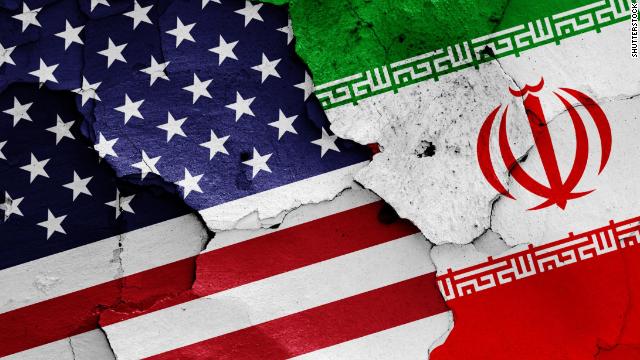
Market Overview
Prediction market participants are assigning a 98.9% probability that active US military personnel will deliberately enter Iran's terrestrial territory by April 30, with the market showing stable pricing over the past 24 hours despite $159.6 million in trading volume. The exceptionally high probability reflects market expectations about the trajectory of US-Iran tensions in the coming months, though the precise definition of qualifying military action sets a narrow threshold for resolution.
The market's resolution criteria are highly specific: only deliberate operational entries of active-duty US military personnel—including special operations forces—into Iranian land territory count. Excluded from qualification are diplomatic entries, intelligence operatives, contractors, downed pilots, and any incursions into Iran's airspace or territorial waters. This narrow framing is essential to understanding what the 98.9% probability actually implies about market expectations.
Why It Matters
The current odds suggest market participants view a significant escalation in US-Iran military confrontation as the baseline scenario over the next four months. Such an incursion would represent a dramatic shift in direct military engagement between the two countries, potentially signaling a major regional conflict or a substantial change in US military posture toward Iran. The high probability carries geopolitical implications beyond the immediate resolution event, as it reflects broader market sentiment about regional instability and the likelihood of kinetic military action.
Key Factors
Several factors likely drive the elevated probability. Ongoing tensions over Iran's nuclear program, regional proxy conflicts in Syria, Iraq, and Yemen, and periodic cycles of military brinksmanship between Washington and Tehran all create a baseline environment where such an incursion could plausibly occur. Developments in Iranian-backed militia activities, Israeli-Iranian escalations that could draw US involvement, or new sanctions and counter-measures could all create triggering events. The market also likely accounts for the relatively long four-month window—April 30 provides substantial time for circumstances to change.
However, the market definition itself may artificially inflate the probability. The requirement for deliberate, operational entry into terrestrial Iran is a high bar that excludes many scenarios where US forces might engage Iranian forces or assets. Incursions that occur but remain classified or disputed, operations that fall short of the explicitly terrestrial and operational threshold, or escalations that remain aerial or maritime in nature would all resolve as \"No\" despite representing significant military engagement.
Outlook
The stability of the probability over recent periods suggests current geopolitical conditions are being priced in without sharp shifts in market sentiment. Future developments that could move the needle include any direct military confrontation in the region, significant changes in US military posture toward Iran, Iranian provocations of a scale that triggers explicit military response, or conversely, diplomatic breakthroughs that reduce tensions. The narrow resolution criteria mean the market is pricing a very specific outcome—not merely escalation or tension, but actual deliberate US military personnel crossing into Iranian territory. This distinction is critical for traders monitoring the market.